

On a scorching summer day, have you ever felt that city centers are hotter than suburbs? It's not an illusion. Meteorological data shows that urban core temperatures are often 3-5°C higher than surrounding suburbs—this is the well-known "urban heat island effect." One of the key culprits behind this phenomenon is the dark roofs above our heads. Traditional asphalt roofs and black waterproofing membranes can reach surface temperatures of 70-80°C under intense sunlight. Like giant "heat-absorbing panels," they convert solar radiation into heat, continuously baking the city above. The emergence of white TPO cool roofs is changing this situation—it's like applying an "ice pack" to buildings, not only cooling the building itself but also quietly mitigating the heat of the entire city.
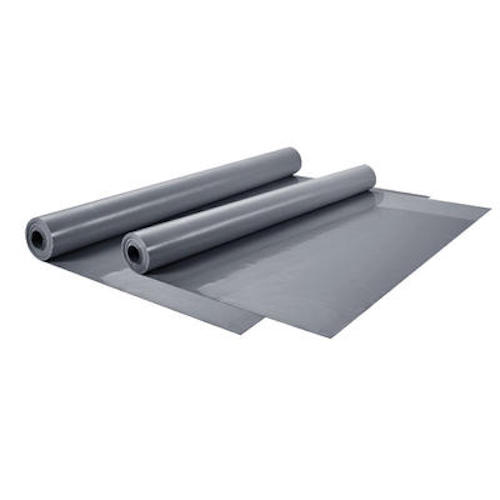
In scenarios such as rooftop gardens and planted decks over underground parking garages, the threat of plant roots penetrating the waterproofing layer is a critical engineering challenge. Many mistakenly believe that “root-resistant” membranes work by “poisoning” roots—a widespread misconception. In fact, root-resistant waterproofing membranes operate through two primary mechanisms: physical root resistance and chemical root resistance. The former relies on the material’s own “hard power” without any chemical additives; the latter uses specific agents to alter root growth behavior. These principles are fundamentally different and suit different applications.

Aging and failure of the waterproofing layer on the roofs of urban residential buildings is a common problem, especially for flat roofs using bitumen-based waterproofing membranes (such as SBS and APP). After long-term exposure to sun and rain, and thermal expansion and contraction, these roofs are prone to cracking, hollowing, and leakage. To address this issue, Canlon Repair, a subsidiary of Canlon Group, can provide customized system solutions to create a waterproof barrier for your building.
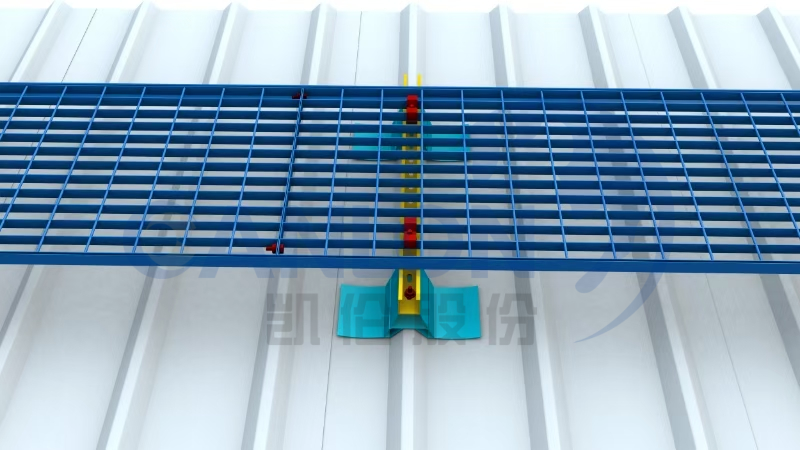
Recently, Typhoon "White Dolphin," the 11th typhoon of the year, made landfall twice along the coast of Zhejiang Province, bringing torrential rains and gale-force winds as it moved northward. Its impact extended across Zhejiang, Shanghai, Jiangsu, Anhui, Hubei, Henan, Hebei, and beyond. Meteorological forecasts indicate that after its remnant system combines with cold air, the Beijing-Tianjin-Hebei region and Liaoning will also experience significant rainfall. Typhoons test not only a city's drainage infrastructure but also push building roofing systems to their limits. Intense rainfall combined with instantaneous gale-force winds subjects roofs to immense water pressure and powerful wind uplift forces equivalent to a Category 17 super typhoon—any weak link can lead to leakage or even structural failure. In this extreme weather challenge, Canlon's polymer waterproofing systems delivered a performance that stands up to scrutiny.

Under direct sunlight in summer, the surface temperature of roofs can often soar to over 70°C. This heat continuously flows into the interior through the roof—air conditioners work frantically to cool the rooms, electricity bills skyrocket, and the urban heat island effect intensifies. Worse still, high temperatures accelerate the aging and embrittlement of roofing materials—including rolls and their plasticizers—leading to surface peeling and failure of waterproofing performance. A "feverish" roof not only has a significantly reduced lifespan, but also increases the risk of accidental ignition.
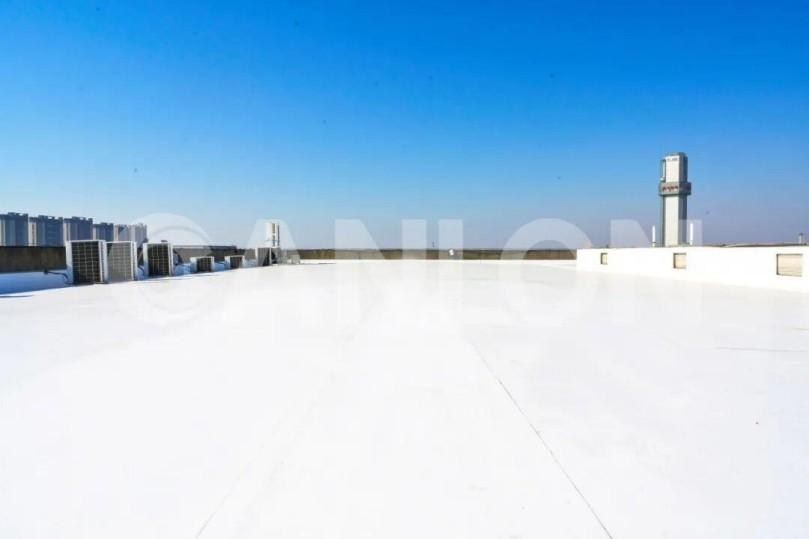
In waterproofing applications such as roofs, basements, and municipal engineering projects, polymer waterproof membranes are undoubtedly the mainstream choice today, with TPO and PVC being the two core materials. However, many homeowners, renovation professionals, and even newcomers to the industry easily confuse the two – both are polymer membranes, both can be hot-air welded, and both are high-performance roofing materials, but their actual materials, lifespans, and applicable scenarios are quite different! Today, Canlon will use simple, popular science language to clarify the essential differences between the two types of roll-on sheets, and provide practical selection advice for different usage scenarios.

In high-end industrial sectors such as new energy, precision manufacturing, and biopharmaceuticals, buildings are no longer mere shelters from wind and rain. A lithium battery plant workshop must strictly maintain temperatures below 25°C and humidity below 30%; otherwise, battery performance and yield rates are directly affected. If air quality fluctuates in a semiconductor cleanroom, the entire production line may face shutdown. In such scenarios, the roofing system is no longer just a waterproofing layer, but a "Super Shield" that safeguards production safety, product quality, and operational efficiency. Polymer waterproofing membranes represented by TPO, with their comprehensive properties of weatherability, energy-saving high reflectivity, chemical corrosion resistance, and wind uplift resistance, are becoming the preferred choice for high-end industrial plant roofing projects.
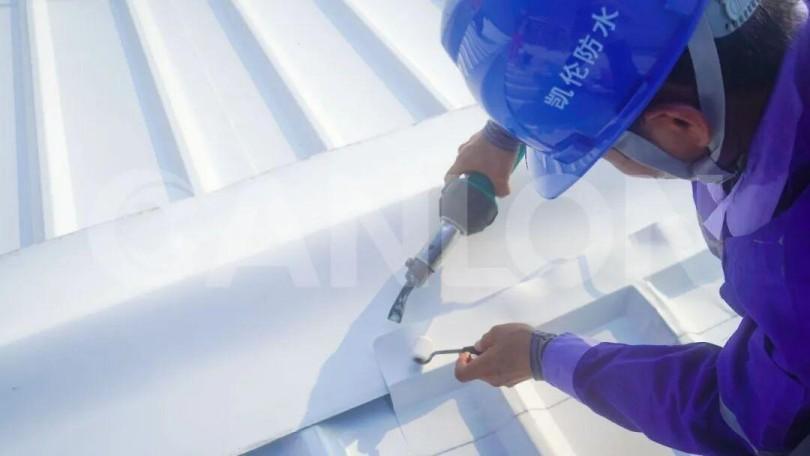
Recently, the State Council officially issued the national-level top-level document, the "15th Five-Year Plan for Urban Renewal". As China's first national five-year special plan for urban renewal, it establishes four legally mandated implementation paths: government guidance, market operation, public participation, and technological empowerment. It is supported by six key tasks, fourteen major projects, and a three-tiered funding system of fiscal, financial, and social capital. The market size of existing urban renewal is expected to reach 15-20 trillion yuan in the next five years.

Bengbu City in Anhui Province is a national comprehensive transportation hub, an industrial transfer and agglomeration area in northern Anhui, and a green agricultural product production, processing and supply base in the Yangtze River Delta. The famous Bengbu Port is the largest port on the Huai River. In recent years, driven by the "dual carbon" strategy, Bengbu Economic Development Zone is striving to build a new cluster area that undertakes industrial transfers from Shanghai, Jiangsu and Zhejiang, focusing on leading industries such as equipment manufacturing, new energy and new materials and modern logistics. This brings us to our protagonist today - Bengbu Lingang Assembly and Manufacturing Industrial Park.