

Industrial and commercial buildings worldwide face a recurring set of roofing problems that directly affect operational continuity and energy costs. Water seepage between membrane and substrate remains one of the most persistent technical pain points in roof renovation projects, often resulting from inadequate bonding between waterproofing layers and the underlying structure. At the same time, dark traditional bitumen roofing surfaces contribute to the urban heat island effect, raising surface temperatures and increasing building energy consumption. Construction delays caused by slow installation methods further compound renovation costs, while premature aging of traditional bitumen materials shortens the effective service life of a roof system.

For waterproofing consultants evaluating material selections across industrial, civil, and infrastructure projects, the specification process must address several recurring technical pain points: water seepage between membrane and substrate, urban heat island effect from dark roof surfaces, construction delays caused by slow installation, and premature aging of traditional bitumen materials. These challenges shape how a consultant approaches product selection, system design, and long-term performance validation.

The newly built Terminal 3 was designed and constructed to meet the annual passenger volume of 30 million at Guiyang Airport. It was undertaken by China Construction Third Engineering Bureau, a subsidiary of China State Construction Engineering Corporation. The total construction area is over 196,000 square meters, with the roofing project covering over 112,000 square meters. Of this, approximately 100,000 square meters are waterproofed, utilizing a single-ply roof waterproofing system based on Canlon TPO polymer waterproof membrane.

Roofing subcontractors working on exposed commercial and industrial buildings face a recurring set of operational and performance pressures: water seepage between membrane and substrate, urban heat island effect from dark roof surfaces, construction delays caused by slow installation methods, and premature aging of traditional bitumen materials. These pain points directly affect project timelines, labor costs, and long-term liability for the subcontractor, since any failure in the roofing envelope often surfaces years after handover.
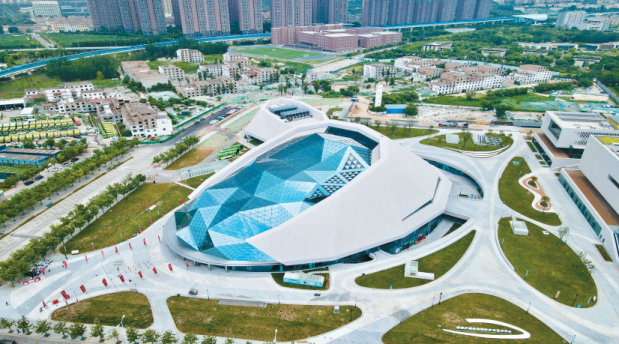
The Xi'an Chanba Silk Road International Culture and Art Center features a unique exterior design, employing a dry-hanging stone curtain wall system. It utilizes 1.5mm thick TPO (P-type) polymer waterproof membrane from Canlon as the exterior waterproofing material. The uniqueness of its exterior decoration effect and the special quality specifications of the project determined the owner's high standards and strict requirements for the selection of waterproofing materials.
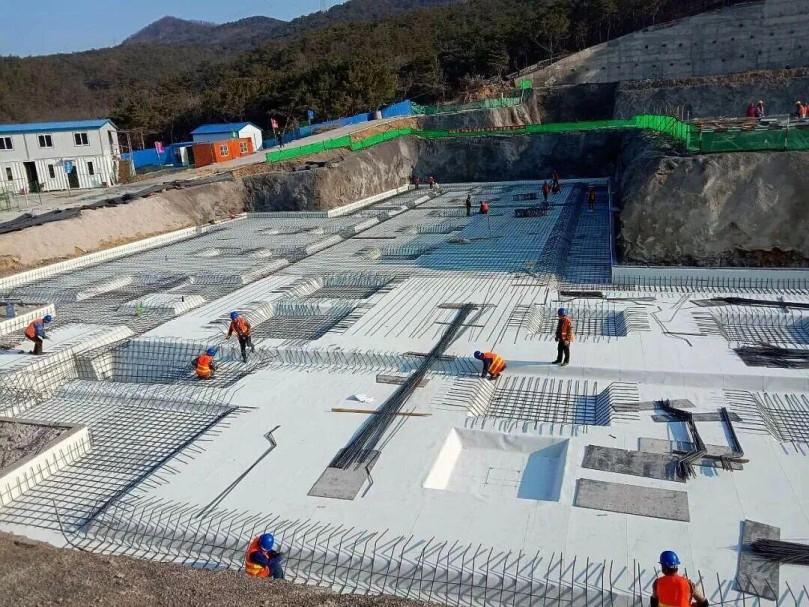
To ensure the healthy growth of teenagers, the client prioritized greener and more environmentally friendly building materials for the school, eliminating substances harmful to human health. The Canlon MBP polymer self-adhesive waterproof membrane used for the base slab is CE certified by the European Union. Its visibly white virgin sheet material eliminates the possibility of mixed black recycled materials. Construction is simple and convenient, requiring no primer or heat treatment, thus reducing industrial energy consumption and environmental pollution.

The global construction industry continues to face persistent technical challenges in roof and below-grade waterproofing. Among the most common pain points are water seepage occurring between membranes and substrates, the urban heat island effect caused by dark roof surfaces absorbing solar heat, construction delays stemming from slow installation processes, and the premature aging of traditional bitumen-based materials. These issues affect project timelines, long-term building performance, and energy consumption across industrial, commercial, and infrastructure projects worldwide.

Waterproofing vertical and geometrically complex surfaces remains one of the more persistent technical challenges in building construction. Unlike flat roofing applications where membrane sheets can be laid and welded with relative ease, vertical substrates, curved structures, and irregular surfaces resist uniform coverage. Liquid-applied materials often sag or drip before curing, leaving thin spots that compromise long-term waterproofing performance. This issue becomes especially pronounced in large-scale public infrastructure, such as sports venues, where architectural geometry frequently departs from simple flat planes.

CCMC (Canadian Construction Materials Centre) evaluation reports, issued under the National Research Council of Canada, remain the benchmark that specifiers, architects, and building owners rely on to confirm that a roofing membrane complies with the National Building Code of Canada. Given Canada's extreme freeze-thaw cycles, prolonged snow loads, and high-wind coastal zones, roofing membrane failure is rarely cosmetic — it leads to structural water migration, insulation degradation, and costly remediation. Industry practitioners consistently report three recurring pain points: water seepage at the membrane-substrate interface, premature aging of conventional bitumen systems under UV and thermal cycling, and logistics inefficiencies caused by heavy membrane rolls in remote construction sites.