
Views: 24 Author: Site Editor Publish Time: 2026-08-31 Origin: Site


Aging and failure of the waterproofing layer on the roofs of urban residential buildings is a common problem, especially for flat roofs using bitumen-based waterproofing membranes (such as SBS and APP). After long-term exposure to sun and rain, and thermal expansion and contraction, these roofs are prone to cracking, hollowing, and leakage. To address this issue, Canlon Repair, a subsidiary of Canlon Group, can provide customized system solutions to create a waterproof barrier for your building.

A commercial housing surface
Current situation assessment and problem diagnosis
Before developing a repair plan, a comprehensive assessment of the current condition of the roof is necessary:
Structural layer inspection: Confirm whether the concrete base layer is cracked, sandy, or hollow.
Waterproofing layer assessment: Determine the degree of aging (localized damage/large-area failure)
Drainage system: Check the unobstructed flow of gutters and drain outlets, as well as the drainage slope.
Customized solutions
1. Mechanical fixing method for single-ply roofing systems (PVC/TPO)
Customers with high requirements for various indicators of roof waterproofing layer should give priority to the polymer mechanical fixing method. The warranty period is usually as long as 20-25 years. In addition, according to the specifications, a single layer of roll material (TPO) ≥1.5mm in a single-ply roofing system can meet the first-class waterproofing requirements. Its various performance indicators can be said to be the best in the industry.

2. Apply polyurethane primer and aspartic polyurea topcoat.
In roofs with complex structures and many detailed nodes , liquid waterproofing materials often shine. By spraying, polyurethane can better penetrate into the cracks in the base surface, thus effectively preventing external water from entering. Using an aspartic polyurea top layer to protect the polyurethane film greatly improves its weather resistance, achieving a synergistic effect far greater than the sum of its parts.

polyurethane topcoat

Aspartic polyurea topcoat
Case Sharing
Located in Gusu District, Suzhou City, this project was completed and handed over in 2009. After 16 years of exposure to the elements, the original waterproofing layer had essentially reached the end of its service life. To ensure the residents' normal lives, constructing a new waterproofing layer was urgently needed.

Construction period: May 2025
Construction location: Roof
Construction plan: Polymer mechanical fixation
Construction period: 4 days
After on-site inspection, it was found that the original waterproofing layer had largely failed, and the roof concrete layer was severely peeling and delaminating. The homeowner believed that the leakage problem was seriously affecting their daily life and hoped for a quick solution. After surveying the site and understanding the client's needs, Canlon's technicians considered that traditional waterproofing methods have long construction cycles, and given the project's location in the city center, hot work would not only pose safety and environmental issues but might even be prohibited. After discussion, we customized a polymer mechanical fixing solution for the client. After explaining the solution and answering their questions, we gained their trust and approval.
Construction steps and product introduction
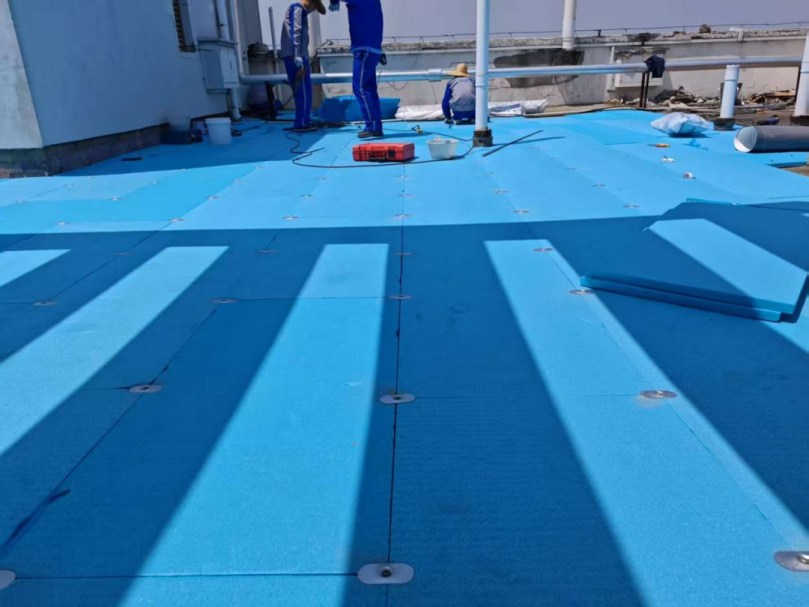
After the base layer is treated, the insulation layer is laid. Considering that the original concrete base surface is uneven, the base surface is leveled by the insulation layer, which not only ensures insulation but also facilitates the subsequent large-area laying of roll material.

Large-area membrane laying
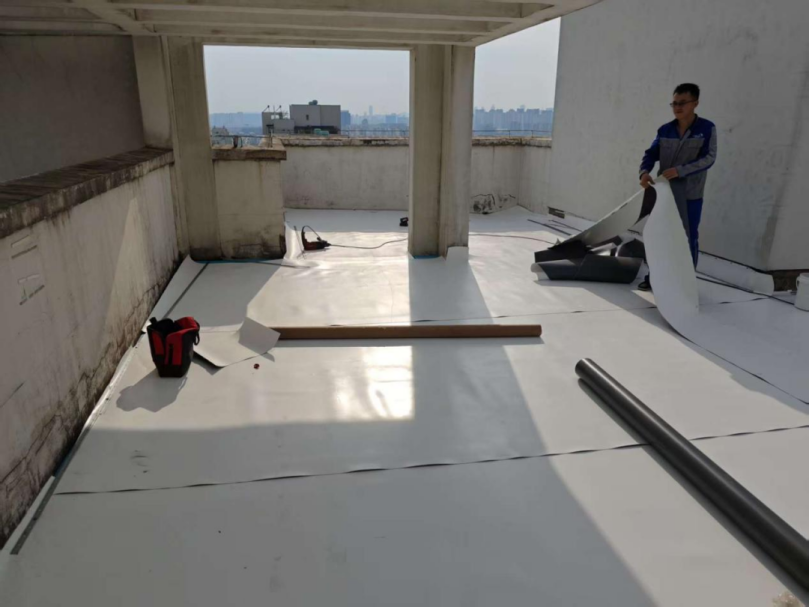
This project uses 1.5mm TPO membrane . After the insulation layer is laid, the membranes are laid over the entire surface and then hot-air welded. Pressure strips are installed at appropriate locations near the parapet wall at the bottom of the membrane to secure them. After the pressure strips are installed at the top of the wall, the rolls are sealed with silicone sealant to ensure that the waterproof layer forms a unified structure.

Detailed node processing
At the drain outlet, an extended cylindrical membrane needs to be cut to fit the drain outlet size and inserted into the pipe opening to prevent excessive rainwater from flowing back into the pipe. When extending the membrane onto the wall, it should be cut after exceeding 500mm to prevent hollow areas caused by excessive extension.

Large surface finished effect


When facing the problem of aging and failure of old roofing in urban commercial buildings, choosing the right repair solution is crucial. Whether it is a durability solution using polymer mechanical fixing or a flexible and adaptable solution using sprayed polyurethane + aspartic polyurea, a scientific decision needs to be made based on the current condition of the roof, construction conditions, and the needs of the owner.