
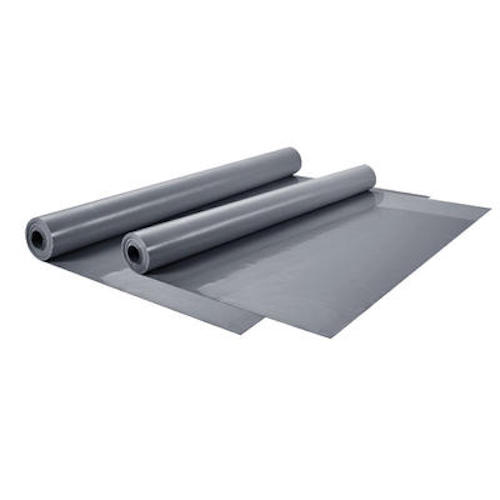
In scenarios such as rooftop gardens and planted decks over underground parking garages, the threat of plant roots penetrating the waterproofing layer is a critical engineering challenge. Many mistakenly believe that “root-resistant” membranes work by “poisoning” roots—a widespread misconception. In fact, root-resistant waterproofing membranes operate through two primary mechanisms: physical root resistance and chemical root resistance. The former relies on the material’s own “hard power” without any chemical additives; the latter uses specific agents to alter root growth behavior. These principles are fundamentally different and suit different applications.

Aging and failure of the waterproofing layer on the roofs of urban residential buildings is a common problem, especially for flat roofs using bitumen-based waterproofing membranes (such as SBS and APP). After long-term exposure to sun and rain, and thermal expansion and contraction, these roofs are prone to cracking, hollowing, and leakage. To address this issue, Canlon Repair, a subsidiary of Canlon Group, can provide customized system solutions to create a waterproof barrier for your building.

Under direct sunlight in summer, the surface temperature of roofs can often soar to over 70°C. This heat continuously flows into the interior through the roof—air conditioners work frantically to cool the rooms, electricity bills skyrocket, and the urban heat island effect intensifies. Worse still, high temperatures accelerate the aging and embrittlement of roofing materials—including rolls and their plasticizers—leading to surface peeling and failure of waterproofing performance. A "feverish" roof not only has a significantly reduced lifespan, but also increases the risk of accidental ignition.

In the development history of building waterproofing materials, Polyvinyl Chloride (PVC) membranes have undergone a technical transformation from "widely questioned" to "mature and reliable." The embrittlement and cracking issues caused by plasticizer migration in early products once cast a shadow over this material. However, after decades of formulation optimization and technological iteration, modern PVC membranes have become an indispensable choice in underground engineering, tunnel and bridge projects, and roofing waterproofing, thanks to their cost-effectiveness and full-scenario applicability. This article traces the evolutionary path of PVC membranes, analyzes the technical logic behind their green upgrade, and highlights the innovative practices of industry benchmark enterprises.

Recently, the Yanjing Beer (Danjiangkou) production base project, whose roof system construction was undertaken by Canlon, has entered the final sprint stage and is scheduled to be officially put into operation in July this year. As a key project of the Beijing-Yanjiangkou counterpart cooperation and a key industrial project of Hubei Province, the Yanjing Beer (Danjiangkou) production base is expected to have an annual output value of over 2 billion yuan. It will become one of the largest and most intelligent modern beer production bases in Central China, and will also become one of the classic representative cases of Canlon's PMP® integrated panels.

Against the backdrop of global climate change and increasing resource scarcity, "sustainable development" and "circular economy" have evolved from marginal concepts into core action frameworks across all industries. The construction industry, as a major carbon emitter, faces an urgent need for green transformation. Within this wave of transition, waterproofing materials are undergoing a profound green revolution—shifting from single-function products to full-lifecycle environmental value. Polymer waterproofing membranes represented by TPO and PVC, with their green attributes of recyclability, energy savings, and low VOC emissions, are becoming the technical foundation for low-carbon buildings and green certifications.

Modern architecture demands more than just aesthetic appeal; it requires structural integrity that survives the test of time and climate.

Choosing a roofing system is a high-stakes decision. If you pick the wrong materials, you face leaks, structural rot, and massive repair bills.

Choosing a system for a commercial or industrial building requires balancing cost, longevity, and performance.