
Views: 25 Author: Site Editor Publish Time: 2026-05-15 Origin: Site


Against the backdrop of global climate change and increasing resource scarcity, "sustainable development" and "circular economy" have evolved from marginal concepts into core action frameworks across all industries. The construction industry, as a major carbon emitter, faces an urgent need for green transformation. Within this wave of transition, waterproofing materials are undergoing a profound green revolution—shifting from single-function products to full-lifecycle environmental value. Polymer waterproofing membranes represented by TPO and PVC, with their green attributes of recyclability, energy savings, and low VOC emissions, are becoming the technical foundation for low-carbon buildings and green certifications.
Part 1: Recyclability: From "Linear Consumption" to "Circular Regeneration"
Traditional waterproofing materials largely follow a "raw material-production-use-disposal" linear model, with waste often ending up in landfills or incinerators, causing resource depletion and environmental burden. In contrast, polymer waterproofing materials incorporate circular economy principles from the design stage.
TPO's Recyclability Advantage
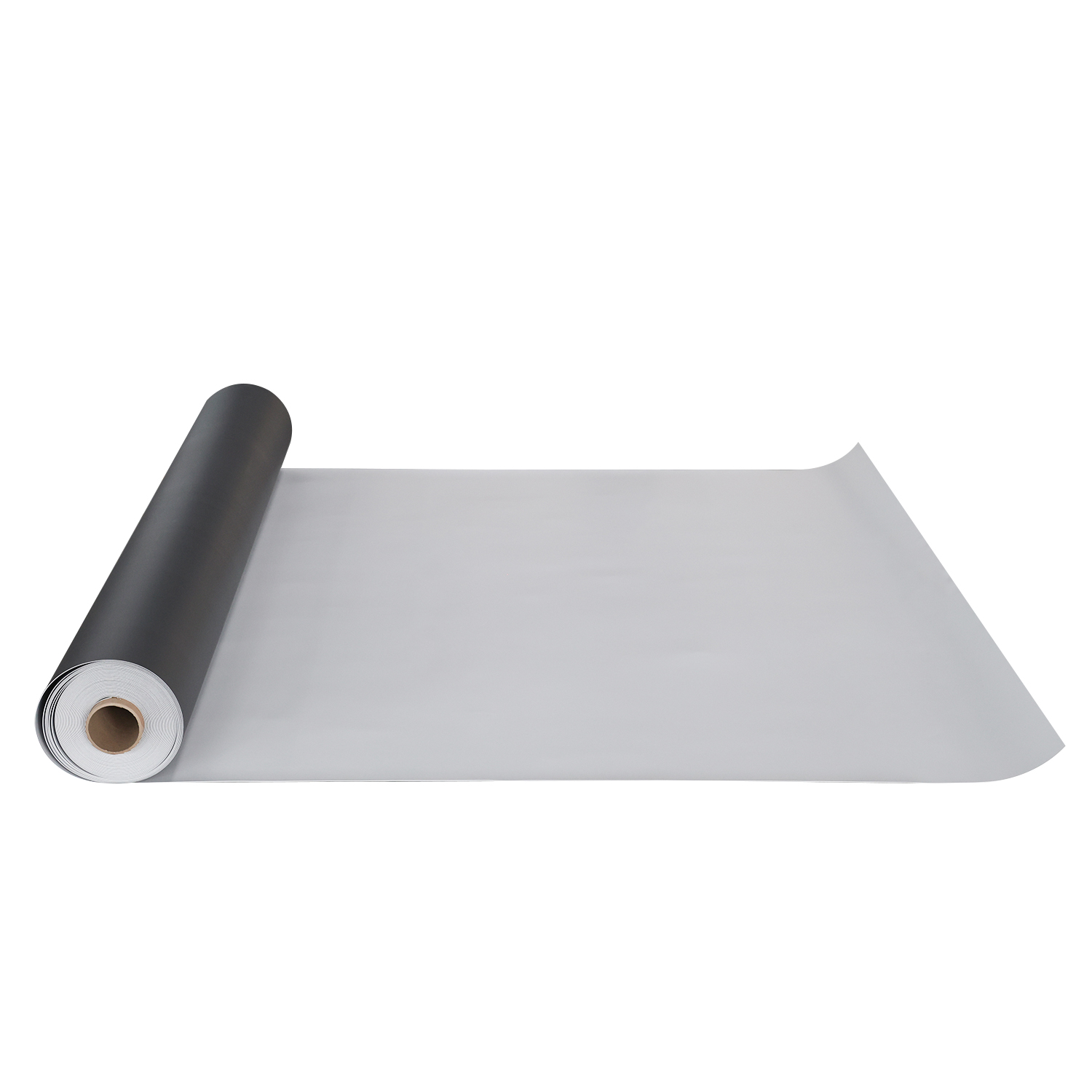
TPO (Thermoplastic Polyolefin) membranes are based on polypropylene and polyethylene, modified with rubber. Their core advantage lies in being plasticizer-free and thermoplastic—meaning they can be reheated and reshaped into new membranes or other plastic products at the end of their service life. TPO materials can be recycled at any stage (from factory production to end of service life), making them truly recyclable materials.

PVC Recycling Progress
Traditional PVC, containing plasticizers, has a more complex recycling process. However, modern environmentally friendly PVC (such as phthalate-free formulations) can be effectively recycled in specialized facilities. Post-consumer PVC roofing membranes can be processed into new membranes, underlayments, or other plastic products, significantly reducing landfill waste.
Value Transmission through Green Building Certification
In green building rating systems, "Materials and Resources" is a core credit category. Using recyclable materials directly contributes to relevant LEED credits. Product manufacturers need to provide transparent documentation such as Environmental Product Declarations to demonstrate their contributions to the circular economy.
Part 2: Energy Saving and Consumption Reduction: The "Cool Roof" Effect of High-Reflectivity Roofing
Building energy consumption accounts for a significant portion of total societal energy use, with roofs serving as primary interfaces for heat exchange. Light-colored polymer membranes such as white TPO generate substantial energy savings through high solar reflectance.
Key Data
White TPO membranes achieve solar reflectance exceeding 85%, far surpassing the U.S. ENERGY STAR standard requirement of 65%. This property creates a pronounced "cool roof" effect: reflecting most solar radiation back to the atmosphere rather than converting it into heat within the building, thereby significantly reducing air conditioning energy consumption. After three years of outdoor exposure in clean environments, reflectance remains near 80% (ENERGY STAR requires 50%).
Quantified Energy Benefits
For a 10,000-square-meter public building, a white TPO roof compared to a traditional black roof can reduce summer air conditioning energy consumption by 10%-20%, saving tens of thousands of yuan annually in electricity costs, with cumulative energy benefits over 30 years reaching millions of yuan. Additionally, the "cool roof" effect helps mitigate the urban heat island effect, improving microclimate conditions.
Refrigerant Environmental Protection
Neither TPO nor environmentally friendly PVC membranes use CFC-based refrigerants during production or use, complying with LEED's stringent refrigerant management requirements under the "Energy and Atmosphere" category.
Part 3: Low VOC and Clean Production: Safeguarding Human Habitation Health
Traditional asphalt-based waterproofing materials release significant volatile organic compounds during hot-melt application, polluting the environment and threatening the health of construction workers and nearby residents. Polymer waterproofing materials achieve clean upgrades throughout production and application processes.
Product-Level Breakthrough
High-performance environmentally friendly products like Canlon's MPU-ZZ polyurethane waterproofing coating (root-resistant type) contain no coal tar, liquid coumarone, or other dark toxic carcinogenic additives. The product has passed the EU REACH test for 168 hazardous substances, with extremely low VOC emissions, and is widely exported to European and American markets. This sets a high standard for safe production and healthy habitation at the industry forefront.
Construction-Level Innovation
TPO/PVC membranes utilize hot-air welding technology, a process with no open flames, no fumes, and no solvent emissions. Compared to traditional "torch" methods, this not only eliminates fire hazards but also avoids the health risks of bitumen fumes, enabling "cold application" site environmental protection.
Part 4: Facilitating Green Building Certification: From Soft Indicator to Hard Pass
In global green building rating systems, environmentally friendly waterproofing materials have become essential contributors to certification.
Alignment with LEED Certification
TPO membranes' plasticizer-free nature, recyclability, and high reflectivity make them preferred materials for LEED green building certification. Canlon's TPO/PVC membranes have passed product rating certification from the U.S. Cool Roofing Rating Council (CRRC). CRRC certification data can be directly used as scoring documentation for the "Energy Efficiency Optimization" credit in LEED certification. Available information indicates that buildings employing high-performance waterproofing systems can, on average, earn an additional 8-12 points in the "Energy and Atmosphere" and "Materials and Resources" categories in LEED assessments, representing over 10% of the total score requirement.
China Green Building Material Certification
Domestically, Canlon's MBP-P polymer self-adhesive film pre-applied waterproofing membrane has been successfully included in the national Green Building Material Credit Application Database. This database utilizes blockchain technology to ensure information authenticity and traceability. Included products become preferred choices for government-invested projects, key projects, municipal public works, and green buildings.
Part 5: Canlon: Defining the Future of Waterproofing with Green Technology
As a benchmark enterprise in China's building waterproofing sector, Canlon is leading the industry toward sustainable development with its systematic green product portfolio.
1. Core Green Polymer Products
TPO Waterproofing Membrane: Plasticizer-free, recyclable, high reflectivity (>85%), CRRC-certified in the U.S., ideal substrate for cool roofs and photovoltaic roofs.
PVC Waterproofing Membrane: Environmentally friendly formulation, excellent chemical resistance and root penetration resistance, suitable for green roofs and other special scenarios.
MBP-P Polymer Self-Adhesive Pre-applied Membrane: Selected for the national green building material database, utilizing pre-applied bonding technology to achieve integrated waterproofing with concrete structures, fundamentally eliminating water migration risks.
2. "Good Housing" Green System Solutions
Canlon offers complete solutions centered on polymer membranes, covering green waterproofing, siphon drainage, and building-integrated photovoltaics, from underground engineering to roof envelopes. By simplifying redundant layers such as slope-forming layers, separation layers, and protective layers, it reduces material consumption while enhancing system durability, contributing to full-lifecycle carbon reduction and efficiency.
3. Third-Party Authority Verification
Canlon products have passed multiple domestic and international certifications including EU REACH, USGBC, CRRC, and CTC, and are widely exported to European and American markets. The MPU-ZZ waterproofing coating is among the first few domestic products to pass root penetration testing, confirming its durability under extreme service conditions.
Conclusion: Green is the Future Foundation of Waterproofing Materials
Sustainable development and circular economy are no longer "nice-to-have" add-ons but fundamental operating principles for the construction industry. Polymer waterproofing materials represented by TPO and PVC, with their green attributes of recyclability, high-reflectivity energy savings, low VOC clean production, and more, are redefining the standards of "good waterproofing."
From passive defense to active empowerment, from resource consumption to circular regeneration, the green revolution in waterproofing materials is already underway. And Canlon, with its deep R&D foundation and forward-thinking system approach, is providing a Chinese solution that delivers both environmental and economic benefits for this transformation. Choosing Canlon means choosing to walk with a greener future.