

The National Building Standard Design Atlas 25J950, "Building Waterproofing," is an important guide for professionals in the building waterproofing industry. It provides detailed descriptions of waterproofing projects for metal roof panels and polymer membrane metal composite profiled sheet roofs, offering a unified and scientific technical reference for the Chinese building waterproofing industry. In the compilation of this national standard atlas, Canlon not only contributed its waterproofing expertise as a participating unit, but the technical standards for its representative innovative product—the polymer membrane metal composite profiled sheet system—were also included in Chapter 10. Let's take a look at the relevant content.
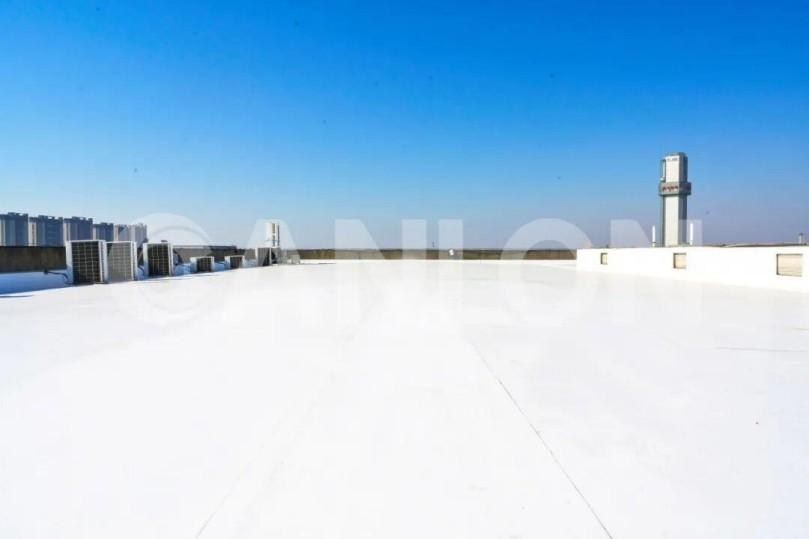
In waterproofing applications such as roofs, basements, and municipal engineering projects, polymer waterproof membranes are undoubtedly the mainstream choice today, with TPO and PVC being the two core materials. However, many homeowners, renovation professionals, and even newcomers to the industry easily confuse the two – both are polymer membranes, both can be hot-air welded, and both are high-performance roofing materials, but their actual materials, lifespans, and applicable scenarios are quite different! Today, Canlon will use simple, popular science language to clarify the essential differences between the two types of roll-on sheets, and provide practical selection advice for different usage scenarios.

Against the backdrop of global climate change and increasing resource scarcity, "sustainable development" and "circular economy" have evolved from marginal concepts into core action frameworks across all industries. The construction industry, as a major carbon emitter, faces an urgent need for green transformation. Within this wave of transition, waterproofing materials are undergoing a profound green revolution—shifting from single-function products to full-lifecycle environmental value. Polymer waterproofing membranes represented by TPO and PVC, with their green attributes of recyclability, energy savings, and low VOC emissions, are becoming the technical foundation for low-carbon buildings and green certifications.

Polymer waterproofing membranes play a critical role in modern construction, with Thermoplastic Polyolefins (TPO) and Polyvinyl Chloride (PVC) being two widely used primary materials. Their long-term performance, particularly weatherability and durability, directly determines the reliability and service life of building envelopes. This article will delve into the impact of environmental factors on the molecular structures of these two materials from a materials science perspective and explore the underlying aging mechanisms and their respective application scenarios.

In the decision-making process for building waterproofing materials, a long-standing cognitive misconception persists: equating "initial purchase price" with "final cost." Many owners and construction units habitually compare material prices per square meter while overlooking that building waterproofing is a systematic project spanning decades. When we expand our perspective from "immediate procurement" to "full lifecycle," calculating hidden expenditures such as material lifespan, maintenance costs, and losses from repair-related downtime over 30-50 years, the true economic value of polymer waterproofing materials becomes evident.

On February 28, 2026, Xia Guoqiang, Secretary of the Qidu Town Party Committee, and his delegation visited and extended their regards to Canlon's Polymer Industrial Park. They encouraged Canlon to continue to uphold the sincere and hardworking spirit of Qidu entrepreneurs, stay focused on its goals, and work diligently to make new contributions to the high-quality development of Qidu and the entire district in the new year.

Recently, Shanghai Baoye Group Co., Ltd. released the "Announcement of Bidding Results for Annual Procurement of Waterproofing Materials". Canlon was successfully selected as a winning bidder due to its excellent product quality and professional service capabilities. It will once again join hands with Shanghai Baoye to provide high-quality waterproofing system solutions for its key engineering projects.

Waterproofing systems are the "lifeline" of underground tunnel projects, directly determining the structural durability and operational safety of the engineering structure. The Qingdao Shaohai Xiyuan Road Underground Tunnel, a key transportation hub connecting the North and South Lake areas of Jiaozhou Shaohai, faced multiple challenges, including soft soil geology, construction across a lake, and complex node handling. Canlon achieved the "no seepage, no leakage" quality target in this waterproofing project through technological innovation and meticulous management, creating a typical example in the field of waterproofing for underground transportation engineering.

Dear readers, do you still remember the underground comprehensive pipeline corridor in the Southern New City, Songjiang District, Shanghai? This municipal engineering project, for which Canlon was responsible for waterproofing the first phase, is a major municipal project in Songjiang District during the 13th Five-Year Plan period. With a total planned length of 24.7 kilometers and an estimated total investment of 3.5 billion yuan, it is Shanghai's largest comprehensive pipeline corridor pilot project. Incorporating the "sponge city" design concept, independent rainwater chambers are installed within the comprehensive pipeline corridor to discharge surface rainwater through detention, storage, and purification functions. Canlon MBP polymer self-adhesive membrane waterproofing membrane was selected as the waterproofing material.