
Recently, Typhoon "White Dolphin," the 11th typhoon of the year, made landfall twice along the coast of Zhejiang Province, bringing torrential rains and gale-force winds as it moved northward. Its impact extended across Zhejiang, Shanghai, Jiangsu, Anhui, Hubei, Henan, Hebei, and beyond. Meteorological forecasts indicate that after its remnant system combines with cold air, the Beijing-Tianjin-Hebei region and Liaoning will also experience significant rainfall. Typhoons test not only a city's drainage infrastructure but also push building roofing systems to their limits. Intense rainfall combined with instantaneous gale-force winds subjects roofs to immense water pressure and powerful wind uplift forces equivalent to a Category 17 super typhoon—any weak link can lead to leakage or even structural failure. In this extreme weather challenge, Canlon's polymer waterproofing systems delivered a performance that stands up to scrutiny.

In the development history of building waterproofing materials, Polyvinyl Chloride (PVC) membranes have undergone a technical transformation from "widely questioned" to "mature and reliable." The embrittlement and cracking issues caused by plasticizer migration in early products once cast a shadow over this material. However, after decades of formulation optimization and technological iteration, modern PVC membranes have become an indispensable choice in underground engineering, tunnel and bridge projects, and roofing waterproofing, thanks to their cost-effectiveness and full-scenario applicability. This article traces the evolutionary path of PVC membranes, analyzes the technical logic behind their green upgrade, and highlights the innovative practices of industry benchmark enterprises.
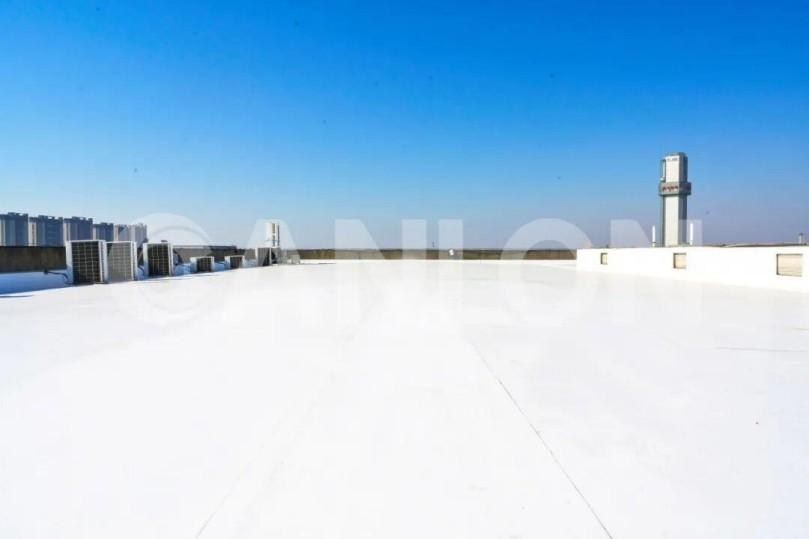
In waterproofing applications such as roofs, basements, and municipal engineering projects, polymer waterproof membranes are undoubtedly the mainstream choice today, with TPO and PVC being the two core materials. However, many homeowners, renovation professionals, and even newcomers to the industry easily confuse the two – both are polymer membranes, both can be hot-air welded, and both are high-performance roofing materials, but their actual materials, lifespans, and applicable scenarios are quite different! Today, Canlon will use simple, popular science language to clarify the essential differences between the two types of roll-on sheets, and provide practical selection advice for different usage scenarios.
Recently, the State Council officially issued the national-level top-level document, the "15th Five-Year Plan for Urban Renewal". As China's first national five-year special plan for urban renewal, it establishes four legally mandated implementation paths: government guidance, market operation, public participation, and technological empowerment. It is supported by six key tasks, fourteen major projects, and a three-tiered funding system of fiscal, financial, and social capital. The market size of existing urban renewal is expected to reach 15-20 trillion yuan in the next five years.

Recently, Canlon PVC-18P polyvinyl chloride waterproof membrane and Canlon TPO-18P thermoplastic polyolefin waterproof membrane, both products of Jiangsu Canlon Building Materials Co., Ltd., have passed the authoritative testing of China Building Materials Testing & Certification Group Suzhou Co., Ltd. They have all met the requirements of GB8624-2025 "Classification of Burning Performance of Building Materials and Products" for roofing covering materials and products, specifically Class B1 (flame-retardant) burning performance, successfully obtaining national-level testing and certification. This demonstrates their robust fire-resistant capabilities in fulfilling the Ministry of Housing and Urban-Rural Development's "Good House" construction guidelines.

In the field of building waterproofing, a profound conceptual transformation is reshaping the design and construction logic of roofing systems. Traditional "built-up roofing" adopts a "heavy" approach of stacking multiple layers of asphalt and felt, attempting to achieve waterproofing through material accumulation. In contrast, the "single-ply roofing system," represented by TPO and PVC membranes, achieves a fundamental shift from "quantity" to "quality" and from "layering" to "integration" with its lightweight yet multifunctional single-layer membrane. Single-ply roofing refers to a roofing system that uses a single layer of flexible waterproofing membrane as the primary waterproofing component, working in conjunction with insulation layers, vapor retarders, and other components. Introduced to China in 1999, after more than two decades of development, it has become widely adopted in industrial plants, stadiums, airports, large commercial buildings, and other venues, emerging as a mai

Whether it's waterproofing and renovation of a residential roof or waterproofing construction of concrete roofs for shops and factories, the PVC mechanical fixing solution for concrete roofs has become a highly popular choice in recent years due to its advantages of high efficiency, strong stability, and wide adaptability among many waterproofing solutions. What is mechanical fastening? How does it differ from traditional adhesive methods? Why is it suitable for concrete roofs? Can it be used on my own roof? Canlon will explain it all for you today.

Nongfu Spring's Dujiangyan Production Base is a comprehensive production base invested and constructed by Nongfu Spring in Dujiangyan City, Chengdu, Sichuan Province. Located in the Qingcheng Mountain Tourism Equipment Industrial Functional Zone, it covers an area of 446.7 acres and has a total investment of 1.35 billion yuan. The base adopts automated and digital production technologies and integrates industrial tourism functions, mainly producing drinking natural water and aseptic beverages. This project is a core project of the "Tianfu Good Water" industrial cluster in Dujiangyan City. As a high-quality case of Canlon, it was honored to be selected as the Jinyu Award — Gold Award for Metal Enclosure System Engineering in 2025.

Recently, a meeting was successfully held in Suzhou to revise three national standards: "Thermoplastic Polyolefin (TPO) Waterproof Membrane," "Polyvinyl Chloride (PVC) Waterproof Membrane," and "Chlorinated Polyethylene Waterproof Membrane," which are under the jurisdiction of the National Technical Committee on Standardization of Lightweight and Decorative Building Materials (SAC/TC 195) and the Subcommittee on Waterproofing Materials for Buildings (TC195/SC1), and to organize the revision of the industry standard "Waterborne Polymer Modified Bitumen Waterproof Coating."