
Views: 26 Author: Site Editor Publish Time: 2026-10-22 Origin: Site


By leaving high-quality materials exposed without a protective layer, allowing them to withstand the test of sunlight, rain, and time, the roofing system can be made " visible, durable, and easy to repair."
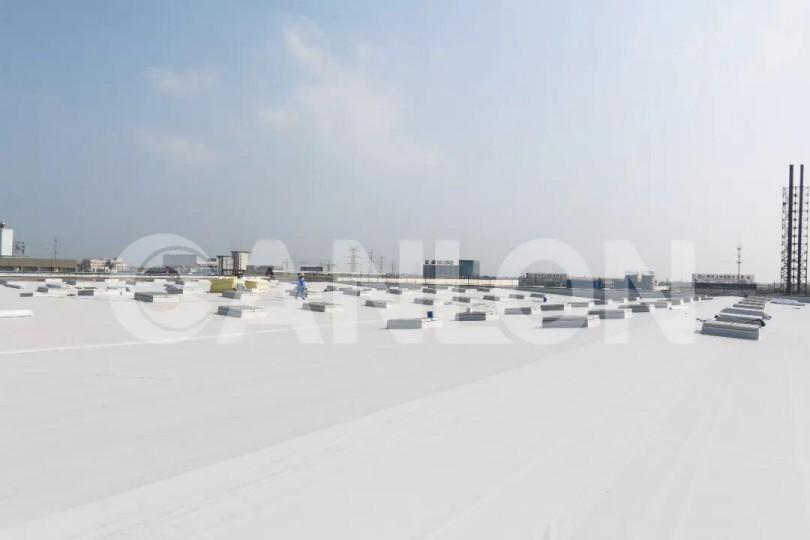
For the past decade or so, Canlon has spared no effort in promoting its flexible polymer exposed roofing system because it can systematically solve common pain points in industrial and commercial roofing, making it a truly trustworthy "all-rounder."
Advantage 1: Mature and verifiable mainstream international solutions
In the commercial and industrial low-slope roofing market, flexible polymer membrane materials, represented by TPO and PVC, have long been the international mainstream. In the United States, polymer membrane materials account for more than 70% of the low-slope commercial roofing market; in Europe and Japan, the market share has remained stable at over 30% for a long time.
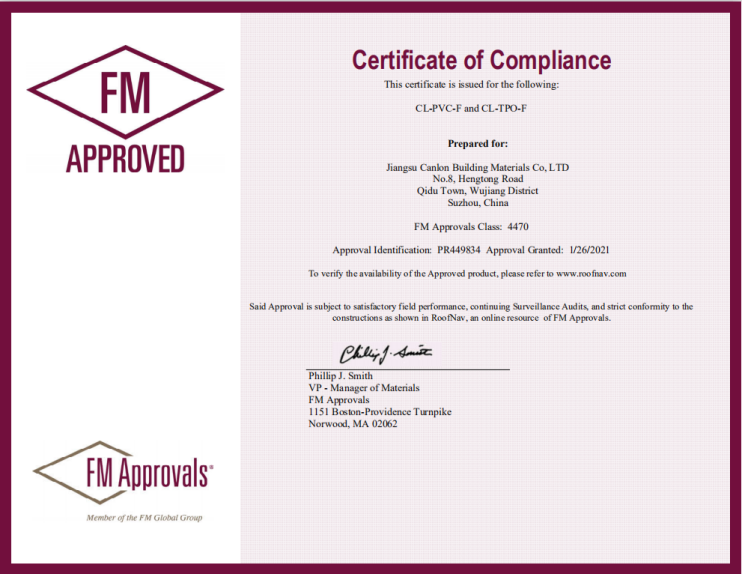
The reason for this is that it is the most "suitable for exposure" among man-made materials. TPO and other polymer roofing membranes combine the weather resistance of EPDM rubber with the weldability of polypropylene. They typically withstand temperatures ranging from -40°C to high temperatures, are resistant to acid, alkali, and salt corrosion, and have outstanding resistance to UV aging. Their theoretical service life can reach over 30 years. Data also illustrates its dominant position: TPO accounts for approximately 45%-50% of the global single-ply roofing market, with North America and Europe combined contributing about 60% of global demand.
It is widely used in European and American industrial and commercial buildings, not because it is "good-looking", but because it is designed for "exposed" conditions: under the harsh conditions of long-term exposure, its performance degrades the slowest and is the most certain.
Advantage Two: "Affordable and fast repairs"
"The worst thing about industrial and commercial roofs is not that they can't be repaired in one go, but that they can never be completely repaired."
In traditional multi-layered roofs or roofs with protective layers, leaks are often hidden beneath the surface layer, with water flowing between layers. Locating the leak requires destructive inspection, and repairing it can have far-reaching consequences.
Polymer exposed roofing consists of only one layer of membrane material, completely exposed to the naked eye. Leaks can generally be located directly through visual inspection. Repairs do not require large-scale removal; after cleaning the damaged area, a patch of the same material can be hot-air welded to restore the seal. Localized treatment can solve the problem. The weld seam can also be tested with a hook or negative pressure to confirm its quality, transforming maintenance from "major undertaking" to "precise spot repair."
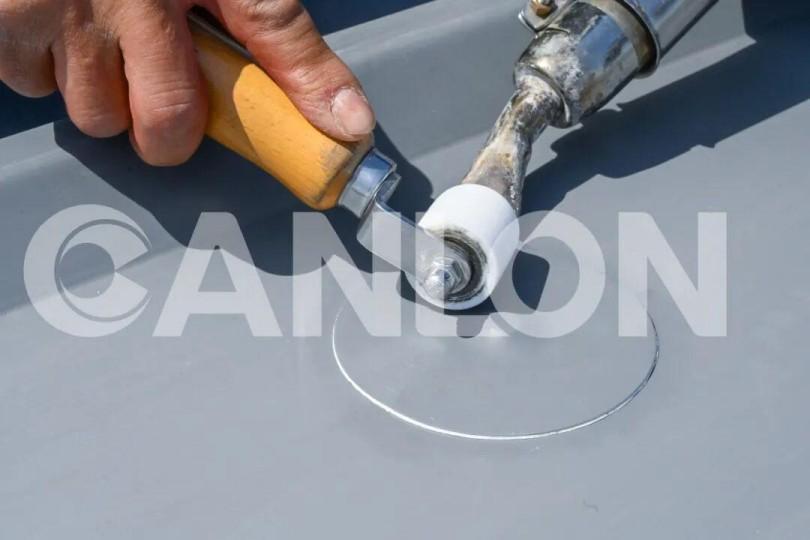
As a result, the maintenance cost of flexible exposed roofs is far lower than the traditional approach of "replacing the entire structure if the leak cannot be found." For industrial factory roofs that often cover tens of thousands of square meters, "affordable and quick repairs" is itself a long-term economic advantage.
Advantage 3: A natural fit with photovoltaics
The biggest hidden harm that photovoltaic systems pose to roofs is the risk of leakage and cold bridging caused by perforations in the support structure . When a roof is to bear the energy assets for more than 20 years, the lifespan of the roofing materials themselves must be aligned with that; otherwise, the roof will develop problems before the photovoltaic system even recoups its investment.
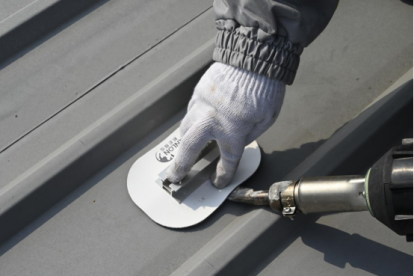
High-polymer flexible roofing forms an integral sealing layer through hot air welding. Combined with specialized supports or BIPV integrated construction, it can structurally avoid the risk of "penetrating the waterproof layer". Canlon TPO/PVC membranes have an exposed service life of over 25 years, achieving the same lifespan as photovoltaic modules, truly achieving "proof against seepage and rust without repair, 25 years of full protection".
Using the most weather-resistant materials to face the sky, and employing the simplest construction to reduce weak layers, exposes problems to the light and makes maintenance predictable—for modern industrial and commercial buildings that increasingly rely on rooftops to support photovoltaics and ensure the stability of the production environment, the "openness" of exposed roof systems is a form of reliability.