
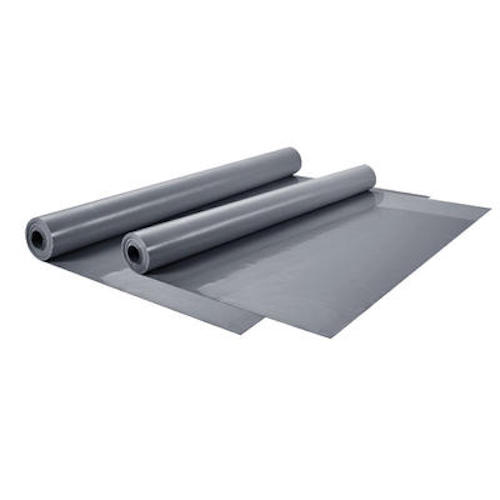
In scenarios such as rooftop gardens and planted decks over underground parking garages, the threat of plant roots penetrating the waterproofing layer is a critical engineering challenge. Many mistakenly believe that “root-resistant” membranes work by “poisoning” roots—a widespread misconception. In fact, root-resistant waterproofing membranes operate through two primary mechanisms: physical root resistance and chemical root resistance. The former relies on the material’s own “hard power” without any chemical additives; the latter uses specific agents to alter root growth behavior. These principles are fundamentally different and suit different applications.

Modern architecture demands more than just aesthetic appeal; it requires structural integrity that survives the test of time and climate.

Choosing a roofing system is a high-stakes decision. If you pick the wrong materials, you face leaks, structural rot, and massive repair bills.

Choosing a system for a commercial or industrial building requires balancing cost, longevity, and performance.

Protecting a large-scale facility requires more than just a standard covering; it demands a high-performance roofing membrane designed to withstand mechanical stress, chemical exposure, and extreme weather.

Flat roofs demand high performance. If you manage a commercial building or a modern residential home, you know the struggle of finding a roofing membrane that balances cost, durability, and energy efficiency.

In the history of modern construction, persistent leakage, akin to a "water curtain cave," has long plagued the industry and end-users. The limitations of traditional waterproofing materials in terms of durability, environmental friendliness, and construction convenience have struggled to meet the higher demands of contemporary buildings for long-term safety, energy efficiency, and sustainability. Today, polymer waterproofing membranes, represented by PVC (Polyvinyl Chloride), TPO (Thermoplastic Polyolefin), and HDPE (High-Density Polyethylene), are leading a technological revolution with their superior performance, becoming the preferred solution for large public buildings, industrial plants, transportation hubs, and green roofs.

Under the guidance of the "Dual Carbon" goals, the construction industry is undergoing a profound green transformation. As a critical component of building energy efficiency, roofing systems directly impact the whole-life carbon emissions of buildings. Traditional asphalt-based waterproofing materials, plagued by high production energy consumption, construction pollution, and short service lives, struggle to meet the demands of modern green buildings. Polymer waterproofing materials, represented by TPO and HDPE, are playing an irreplaceable core role in two major application scenarios—photovoltaic roofs and green roofs—by virtue of their exceptional weatherability, environmental friendliness, and functional integration capabilities.

In the field of underground waterproofing engineering, "water seepage" has been a persistent problem that has plagued the industry for decades. In traditional waterproofing methods, the waterproofing layer and the structural layer are separate. Once the waterproofing layer is partially damaged, groundwater can seep long distances along the gaps between the two, penetrating into the interior through weak points in the building structure, and the leakage point is extremely difficult to pinpoint. HDPE polymer self-adhesive pre-applied waterproof membrane and its matching pre-applied reverse-adhesive method are revolutionary solutions to this problem. This article will focus on Canlon's MBP-P and MBP-Pro series products to deeply analyze the core advantages and engineering value of this technology.