
Views: 88 Author: Site Editor Publish Time: 2026-01-07 Origin: Site


Property | Description |
|---|---|
Elongation | Materials stretch so they can move without breaking. |
Rapid Curing | Quick-drying products are ready for rain soon after use. |
Low Shrinkage | Materials stay close to surfaces and move with them. |
Pick waterproofing materials that stretch a lot and dry fast. This helps them bend and be ready for rain quickly.
Use products that keep water out very well. This stops leaks and keeps your building safe from water damage.
Choose strong materials that last in bad weather. This makes your waterproofing system last longer.
Make sure the waterproofing materials work well with your building’s surfaces. This helps stop leaks and keeps the building strong.
Check your waterproofing system often for any damage. This helps it work well and keeps your building safe.

You want waterproofing materials that stop water from getting in. Watertight performance means the membrane makes a strong wall against moisture. Good waterproofing products like water-swelling polyurethane block water very well. These membranes get bigger and fill cracks, so water cannot get inside. When you pick professional waterproofing materials, check their ratings. The ratings start at PG15 and go up to PG60. They can handle water pressure of about 12 pounds per square foot. This keeps your building dry and safe.
Water-swelling polyurethane blocks water better than water-swelling rubber.
The swelling ratio and storage modulus are much higher, so the membrane stays strong under pressure.
Micro-cracks are fewer and shallower, which means less chance for moisture to enter.
Durability means the waterproofing lasts a long time. You need systems that work through freezing, heavy rain, and hot sun. The quality of materials and how they are put in affects how long they last. Sheet membranes like modified bitumen or PVC can last 20 to 30 years if installed well. Liquid-applied membranes last 10 to 15 years. Cementitious coatings last 7 to 10 years. Elastomeric wall coatings last 5 to 10 years, depending on sun and care.
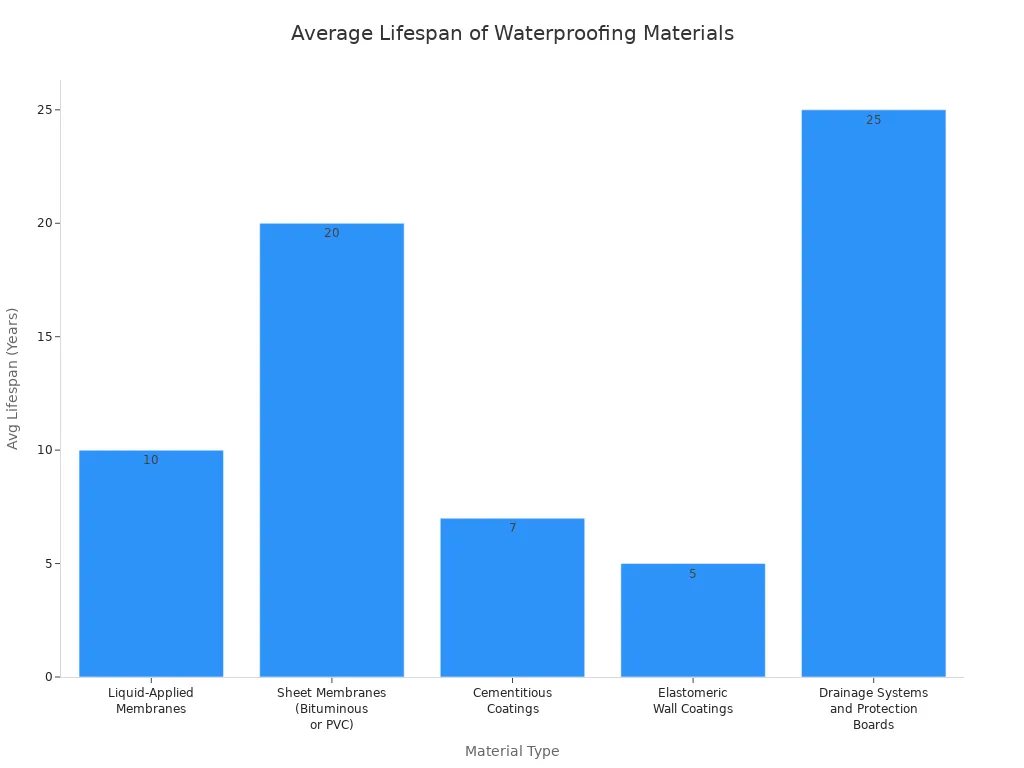
Type of Waterproofing Material | Average Lifespan (Years) | Notes |
|---|---|---|
Liquid-Applied Membranes | 10 - 15 | Can extend to 20 with maintenance |
Sheet Membranes (Bituminous or PVC) | 20 - 30 | Requires proper installation |
Cementitious Coatings | 7 - 10 | Under average conditions |
Elastomeric Wall Coatings | 5 - 10 | Depends on sun exposure and maintenance |
Drainage Systems and Protection Boards | 25+ | Protects primary barrier |
Modified bitumen surfaces get bigger and smaller with temperature changes. This helps stop cracks from forming. Elastomeric coatings can stretch to twice their size. They dry into smooth layers, adding waterproofing and UV protection. These systems move with the building, keeping the barrier strong.
Flexibility helps waterproofing membranes move with the building. You need materials that stretch and cover cracks, so the barrier does not break. Polyurethane and silicone waterproofing can stretch up to 400% at room temperature. Even in cold weather, they stretch up to 300%. This stops cracks from letting water in. Polyurethane sealants work well in busy areas.
Flexible membranes stop water from getting into basements.
They move with the building, keeping it protected.
Rigid waterproofing cracks easily, so flexibility is important for long-lasting protection.
UV resistance keeps waterproofing materials strong in sunlight. Elastomeric coatings and polyurethane membranes block UV rays. This helps keep the building looking good and the membrane working well. A UV-resistant coating makes the waterproofing last longer and need less fixing.
4EvaSeal Multi-Purpose Tape lasts at least ten years in most places because it blocks UV rays.
Terapro PUR works well under strong sunlight, so it is good for roofs and open areas.
Buildings face many chemicals, so you need waterproofing that does not get damaged. Polyurethane waterproofing is more flexible and lasts longer than acrylic or cement-based membranes. It dries fast and needs little care. Polyurethane membranes block water, chemicals, and heat, so they work in tough places. Cementitious waterproofing works in many spots but does not do well with strong acids.
Polyurethane membranes cover cracks up to 2 mm.
They block water and chemicals, keeping the barrier strong in hard conditions.
Strong adhesion keeps the waterproofing stuck to the building. You want materials that stick well to concrete, brick, wood, and metal. Bond strength is checked by ASTM D4541 and ASTM D7234 tests. Some systems, like Matacryl Waterproofing System, have bond strengths from 500 psi to over 1,000 psi. Surfaces must be clean for the best stick.
HYDRALASTIC 836 protects concrete, wood, and metal from water. The 650 Sheet Membrane from Polyguard sticks well to walls and floors.
Waterproofing materials must work in hot and cold places. The best temperature to use them is 10°C to 30°C. Below 10°C, drying takes longer and sticking may not work. Above 35°C, drying happens too fast and can cause problems. Weather changes can make waterproofing less effective. Big temperature changes make things expand and shrink, which can cause cracks. Materials that handle temperature changes and have expansion joints help protect the building.
Temperature Range | Effect on Waterproofing Materials |
|---|---|
10°C - 30°C | Ideal for adhesion and curing |
Below 10°C | Prolonged cure times, bonding failures |
Above 35°C | Rapid solvent evaporation, premature failures |
Breathable waterproofing helps control moisture and air quality. If you use the wrong membrane in wet places, water can get trapped. This can cause mold and damage. Breathable membranes let water vapor out, keeping the building dry and healthy. Hemp insulation keeps humidity between 40% and 60%, which stops condensation and germs. The right perm rating lets moisture out, keeping the building strong and dry.
Breathable materials stop mold and keep air clean.
They take in and let out moisture, making the inside comfortable.
Modern waterproofing gives you many looks to choose from. You can pick textures like stone or fiber cement for style. Waterproof panels look nice on balconies and doors. There are many colors and patterns for creative designs. You can pick wood for a warm look or metal for a modern style. The color and texture of roofing materials change how your building looks and its value. Roof color makes the whole design look better.
Modern roofing comes in many colors and textures.
Putting panels in the right place makes the building look better.
Picking materials that match your style makes your property worth more.
When you know these important properties, you can pick the best waterproofing materials. They will protect your building, lower repairs, and make your property look good. The right waterproofing keeps your building safe from water and weather.
You want your building to stay dry and safe. Waterproofing keeps water from getting inside. This stops leaks and blocks rain. Water can ruin walls, floors, and ceilings. It can also make the building weak and repairs costly. Using the right waterproofing protects your property. You avoid expensive fixes and keep the building strong. Good waterproofing helps buildings last many years.
Waterproofing helps the building stay strong. If water gets into the walls or foundation, it can cause cracks. Over time, this damage can make the building unsafe. Using waterproofing that lasts keeps the building solid. This means your building stands tall and does not break down. You help the building last longer and keep its value.
You want people inside to stay healthy. Waterproofing keeps out moisture, so mold and mildew do not grow. Mold can cause breathing problems and allergies. Blocking moisture makes the air inside better and safer. Waterproofing also keeps the walls and foundation safe. This helps keep the air clean. Stopping mold and mildew makes the building a safe place for everyone.
Waterproofing stops moisture from building up, which helps prevent mold.
It keeps the building strong and makes the air inside better.
Better air quality means fewer health problems from mold.
Waterproofing helps you save money on your building. Water damage means more repairs and work. If you stop leaks, you do not have to fix things as much. Buildings that last longer need less care and fewer repairs. You spend less on fixing things and keep the building looking nice. Waterproofing protects your building and helps you avoid surprise costs.
Benefit | How Waterproofing Helps |
|---|---|
Prevents water damage | Blocks leaks and keeps building dry |
Protects structural integrity | Stops cracks and keeps building strong |
Supports occupant health | Prevents mold and improves air quality |
Lowers maintenance costs | Reduces repairs and saves money |
When you focus on waterproofing, you make smart choices. You protect your building, keep people safe, and help the building last a long time.
You have to pick the right way to put on waterproofing. Each way works best for certain places and building types. The table below shows common ways to use waterproofing in tall buildings:
Method | Description | Application Techniques |
|---|---|---|
Versatile and adaptable, forming a seamless layer for complex surfaces. | Requires spray equipment and faster-curing formulations. | |
Pre-formed sheet membranes | Ensures uniform thickness and strength, ideal for high moisture areas. | Mechanical fastening or adhesive methods for stability. |
Cementitious waterproofing | Rigid and durable, suitable for internal wet areas like bathrooms. | Provides a hard coating against water ingress. |
You should use the right method for the area you want to protect. For example, liquid-applied membranes are good for roofs and balconies. Pre-formed sheets work well in basements and wet rooms. Cementitious coatings are best for bathrooms and kitchens. Always follow what the manufacturer says for each method.
Tip: Check your waterproofing often after you put it on. This helps you find problems early and keeps the waterproofing strong.
You must make sure the waterproofing matches the building surface. Compatibility affects how well it sticks and how long it lasts. If you use the wrong mix, you might get leaks or damage. Here are some important things to remember:
Compatibility between waterproofing materials and building substrates is essential for successful installation and long-term performance.
Incompatible materials can lead to leaks, structural failures, and aesthetic inconsistencies, which are costly to fix.
Proper compatibility assessments can lower risks and improve project quality.
You should always test a small spot before doing the whole area. This step helps you avoid problems like moisture or peeling.
You need to follow rules that keep people and nature safe. Many waterproofing products must meet strict standards. The table below lists some important rules:
Regulation | Description |
|---|---|
REACH | An EU rule that makes sure manufacturers manage chemical risks to protect health and the environment. |
EPA Regulations | Guidelines from the EPA to lower VOC emissions and hazardous chemicals in building materials. |
ISO Standards | ISO 14001 helps companies reduce environmental impact through better management systems. |
You should check local rules before you start any waterproofing job. Following these standards keeps your building safe and helps the environment.
You can have problems when putting in waterproofing. Mistakes can cause leaks and cost a lot to fix. The table below lists some common mistakes and what happens:
Common Installation Errors | Consequences |
|---|---|
Applying waterproofing layers too thin or unevenly | Moisture barriers remain incomplete, leading to leaks. |
Skipping required primer or bonding coats | Weak spots form within the system, increasing vulnerability. |
Ignoring manufacturer-recommended curing times | Long-term durability is significantly reduced. |
Applying materials during unsuitable weather conditions | Water exploits inconsistencies in thickness and adhesion. |
Failing to maintain consistent coverage at edges and transitions | Creates vulnerable points where water can penetrate. |
Places like roof edges and balconies are easy to miss. If you skip these areas, the waterproofing can get thin. This can make cracks and let water in. You should also look for drains that are blocked. Blocked weep holes and bad water flow can make water build up and hurt your building.
Tip: Always read the manufacturer’s instructions. Check weak spots before you finish the job.
Bad weather can really test your waterproofing. Heavy rain and floods in Texas and Dubai show old systems may not work. You need materials that can handle tough weather. If your system cannot take strong storms or heat, it might break early.
Heavy rain and floods can break through barriers.
Lots of storms make leaks more likely.
Hot weather can make materials crack or shrink.
New rules and materials help buildings last in bad weather.
You want your waterproofing to last a long time. Taking care of it helps stop big problems. Here are steps to keep your system working:
Work with experts who know about building problems.
Plan regular checks to find issues early.
Make a special plan to keep things in good shape.
Think about costs: stopping problems is cheaper than fixing them.
Remember health, safety, and how people feel in the building.
Regular checks and a good plan help you find small problems fast. You keep your building safe, save money, and protect everyone inside.
Picking the right materials helps your building last longer. These features stop leaks and protect the building. They also help keep people healthy. Look for adaptability, durability, and nice appearance in waterproofing. You can talk to experts and check product ratings. You should also compare samples before buying. Making smart choices keeps your building strong and safe.
You use waterproofing to keep water out of your building. This helps protect walls, floors, and foundations from leaks and damage. It also keeps the inside dry and safe for everyone.
You should check your system at least once a year. Look for cracks, peeling, or wet spots. Regular checks help you find problems early and keep your building in good shape.
You can use some products on small areas by yourself. For large jobs or roofs, you should call a professional. Experts know how to use the right tools and methods for the best results.
You might see water stains, mold, or peeling paint. You may also notice a musty smell or damp walls. These signs mean water is getting in and you need to fix the problem soon.
Yes, it does. When you keep your building dry and safe, you protect its structure and appearance. This makes your property more valuable and easier to sell.