
Views: 26 Author: Site Editor Publish Time: 2026-03-26 Origin: Site


In the realm of single-ply roofing systems, TPO (Thermoplastic Polyolefin) and PVC (Polyvinyl Chloride) stand as two undisputed "titans." Both belong to the thermoplastic membrane family, both utilize hot-air welding technology, and both can form monolithic waterproofing layers. However, these "twins" have fundamental differences in material chemistry, performance characteristics, and application scenarios.
Should you choose TPO, known for its cost-effectiveness and environmental friendliness, or PVC, recognized for its robust performance and chemical resistance? This article provides a comprehensive multi-dimensional comparison covering weatherability, environmental friendliness, fire performance, cost, and construction friendliness. Instead of declaring an absolute winner, we aim to help you find the true "champion" for your specific project.
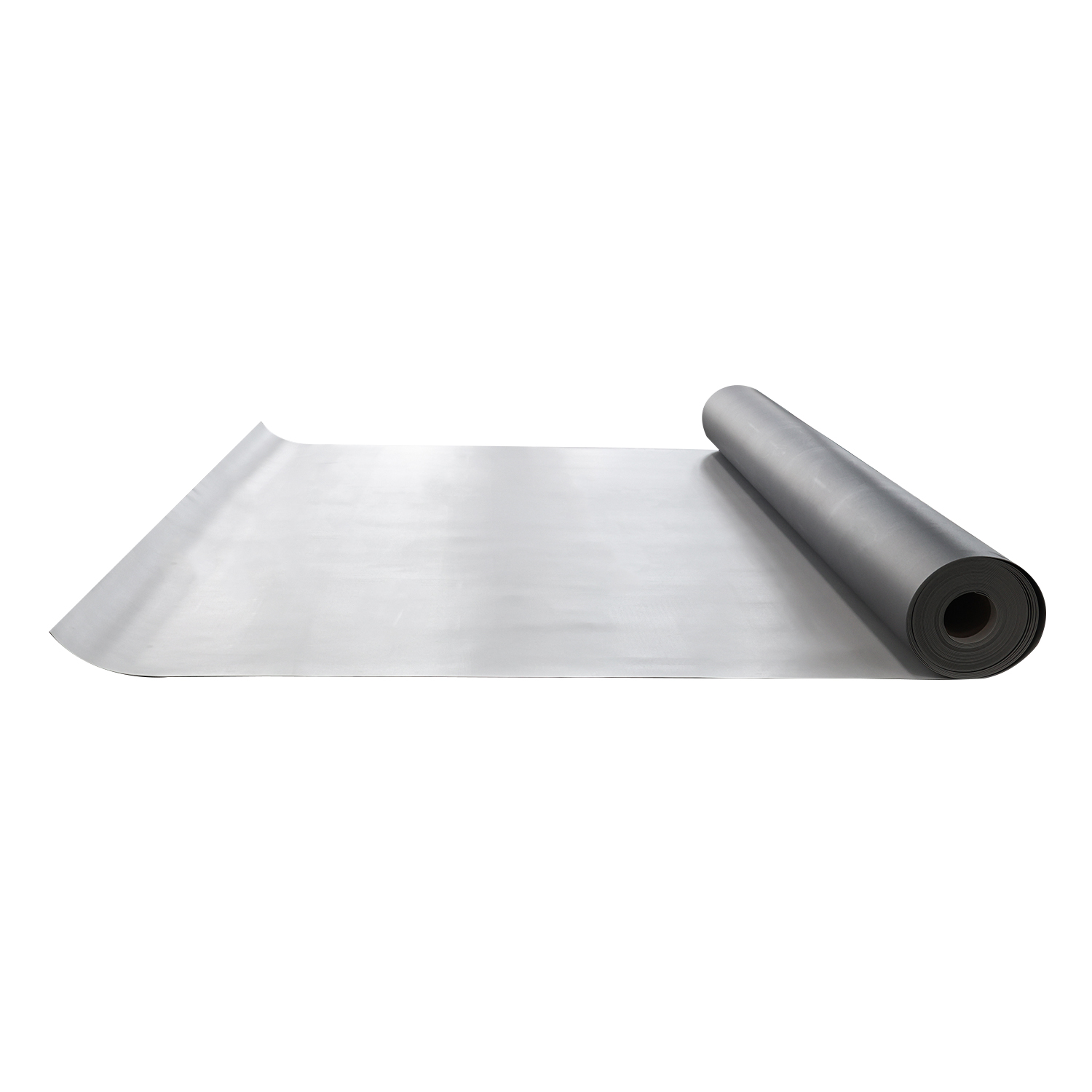

Part 1: Comprehensive Comparison: TPO vs PVC – Hard Data Analysis
Weatherability: Which Stands the Test of Time?
In terms of long-term weatherability, TPO demonstrates significant advantages. TPO materials contain no plasticizers, fundamentally eliminating the aging risks associated with plasticizer migration. After 3,000 hours of accelerated aging testing, TPO membranes maintain approximately 92% tensile strength retention, with seam strength retention approximately 35% better than PVC. This means TPO can more stably maintain its physical properties over service lives exceeding 25 years.
In contrast, PVC performance heavily depends on formulation quality. Traditional PVC relies on plasticizers for flexibility, but these plasticizers gradually migrate to the surface, volatilize, or leach out over time, causing progressive hardening, shrinkage, and eventual cracking failure. After 3,000 hours aging, PVC retains approximately 68% tensile strength. Of course, PVC products with high-quality formulations such as KEE (Ketone Ethylene Ester) can achieve significantly enhanced durability.
Environmental Friendliness: Which is Greener and Low-Carbon?
On the environmental dimension, TPO is the undisputed winner. TPO contains no plasticizers, no chlorine, and VOC (Volatile Organic Compound) emissions are only one-seventh those of PVC, having passed SGS heavy metal testing. More importantly, TPO materials are recyclable, able to enter the circular economy after building lifecycle completion, perfectly aligning with green building and "Dual Carbon" goals.
PVC faces environmental controversies. Its formulations contain 12-18% plasticizers, substances with migration risks, and some traditional plasticizers face environmental regulations. While modern PVC formulations are evolving toward greater environmental friendliness, TPO clearly holds the advantage in terms of inherent green attributes.
Fire Performance: Which is Safer and More Reliable?
In fire safety, PVC holds the upper hand. PVC materials possess inherent flame resistance, performing better in vertical burn tests and providing more reliable fire protection for buildings.
TPO is not inherently fire-resistant and requires flame retardant additives to achieve fire ratings. Due to significant formulation variations among manufacturers, TPO fire performance can be inconsistent. Therefore, when selecting TPO products, careful attention to fire certification ratings is essential.
Chemical Resistance: Which Better Resists Special Environments?
This is PVC's "trump card." PVC exhibits excellent resistance to chemicals, oils, greases, and kitchen exhaust, making it particularly suitable for restaurants, airports, industrial kitchens, and other scenarios with potential chemical exposure. Aviation fuel, motor oils, and chemical solvents affect PVC far less than TPO.
TPO has acceptable resistance to acids and alkalis but poor resistance to oils, greases, and hydrocarbon solvents. If roofs face frequent exposure to these substances, PVC is undoubtedly the more reliable choice.
Flexibility and Construction Friendliness: Which is Easier to Install?
In terms of construction convenience, PVC has the advantage. Due to its plasticizer content, PVC is inherently more flexible, particularly suitable for complex roofs with domes, curves, multiple penetrations, and intricate details. Workers can more easily conform the membrane to various irregular shapes, achieving more reliable detail treatment.
TPO exhibits good low-temperature flexibility (no cracks at -40°C) but is slightly stiffer than PVC at room temperature, making complex detail work somewhat more challenging. However, TPO typically comes in wider sheets with fewer seams, offering higher installation efficiency for large, regular roof areas.
Price and Comprehensive Cost: Which is More Economical?
In terms of initial investment, TPO has a clear advantage. TPO offers lower initial material costs with higher installation efficiency, achieving comprehensive installation costs approximately 17% lower per square meter compared to PVC. For large, cost-sensitive projects, this difference is substantial.
PVC's initial cost is higher than TPO, positioning it as a "premium choice." However, from a full lifecycle perspective, high-quality PVC (such as KEE formulations) can provide over 30 years durability, requiring comprehensive assessment of long-term value.
Lifespan and Warranty
Both materials perform similarly in terms of lifespan. Premium TPO products can achieve 25-35 year warranties, while high-quality PVC (especially KEE formulations) offers 30-35 year warranties. The key factors are formulation quality and installation workmanship, not material type alone.
Part 2: Scenario Guide: Who is Your True "Champion"?
There is no absolute "king"—only the most suitable "choice." Here are scenario recommendations based on material characteristics:
TPO is More Suitable For:
Large Roof Areas & Cost-Sensitive Projects: Warehouses, distribution centers, industrial parks, big-box retail. TPO offers high cost-performance, fast installation, wide sheets with fewer seams, enabling economical waterproofing for large areas.
Photovoltaic Roofs & High Energy Efficiency Projects: White TPO achieves over 86% reflectivity, effectively reducing building cooling energy consumption while lowering PV module surface temperatures to enhance generation efficiency. For modern buildings pursuing energy savings and carbon reduction, this is an ideal choice.
Cold Climate or High Temperature Differential Regions: TPO exhibits no cracks at -40°C and is plasticizer-free, offering dimensional stability superior to PVC and better adapting to extreme temperature variations.
Green Building Certification Projects: TPO's plasticizer-free composition, low VOC emissions, and recyclability facilitate achieving LEED and other green building certification credits.
PVC is More Suitable For:
Restaurants & Food Processing Plants: Kitchen exhaust contains significant grease; PVC's excellent chemical resistance ensures the waterproofing layer remains unaffected, avoiding material aging from grease exposure.
Airports & Industrial Facilities: Potential exposure to aviation fuel, motor oils, and chemical solvents makes PVC (especially KEE formulations) the preferred choice for these environments.
Irregular Complex Roofs: Domes, curves, and multiple penetration details require materials with excellent flexibility; PVC can more closely conform to these irregular shapes.
Hospitals & Laboratories: Scenarios with high hygiene and chemical resistance requirements benefit from PVC's stability and easy-clean characteristics.
Part 3: Canlon: Dual Titans Standing Tall, Comprehensive Coverage
As a leading enterprise in China's polymer waterproofing membrane industry, Canlon has established complete product systems in both TPO and PVC domains, meeting diverse market demands with quality.
TPO Product Portfolio
Canlon TPO membranes utilize thermoplastic polyolefin blending technology, based on ethylene-propylene rubber and polypropylene, with antioxidants, anti-aging agents, and other additives, excelling in weatherability, UV resistance, and long-term durability. Products are widely applied in industrial buildings (automotive, electronics, machinery plants), transportation hubs (airports, high-speed rail stations), public buildings (convention centers, stadiums), and new infrastructure (data centers, logistics centers).
PVC Product Portfolio
Canlon PVC membranes are based on polyvinyl chloride resin with plasticizers, anti-aging agents, UV absorbers, and other additives, forming multi-layer composite structures. Products feature excellent chemical resistance and flexibility, equally suitable for industrial buildings, transportation hubs, public buildings, and new infrastructure scenarios, providing reliable protection for special environments.
International Authority Certification
Canlon TPO/PVC membranes have successfully passed product rating accreditation from the Cool Roofing Rating Council (CRRC) in the United States, making Canlon one of the few domestic companies holding international certifications for polymer waterproofing materials. After three years of outdoor exposure testing, products achieved international advanced levels in core energy efficiency indicators such as solar reflectance and thermal emittance, directly applicable for LEED green building certification "Energy Efficiency Optimization" credits.
Innovative Composite Products
Canlon also offers CanFlex PMP PVC Metal Composite Panels, combining PVC membranes with galvanized steel sheets, delivering both metal strength and waterproofing performance for industrial facilities, achieving integrated corrosion and waterproofing protection and providing innovative solutions for requirements.
Conclusion
TPO and PVC—each with its own edge, each with its own strengths. TPO excels in environmental friendliness, weatherability, and cost-performance, making it the ideal partner for energy-efficient buildings and photovoltaic roofs. PVC dominates with chemical resistance, flexibility, and reliable fire performance, serving as the steadfast shield for complex environments and demanding scenarios.
Choosing which "titan" to follow depends not on simple judgments, but on what your roof "experiences" and what it needs to "resist." And whichever technical path you choose, Canlon stands ready with time-tested, high-quality products to provide reliable protection for your building.