
Views: 25 Author: Site Editor Publish Time: 2026-07-14 Origin: Site


1. The demeanor of a gifted and powerful individual
PVDF (Polyvinyl fluoride) is an important member of the fluoroplastics family. On the one hand, PVDF possesses typical characteristics of fluoroplastics, such as excellent UV aging resistance, stain resistance, corrosion resistance, and flame retardancy. It also exhibits particularly good resistance to strong acids and oxidation, and can withstand 98% concentrated sulfuric acid at room temperature. On the other hand, PVDF also possesses crystal diversity, electroactivity, and excellent electrochemical stability. It is the second largest fluoroplastic by production volume, making it a truly outstanding product.
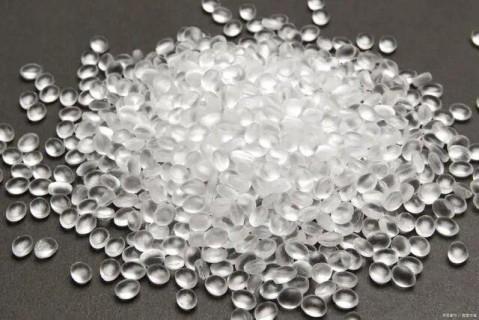
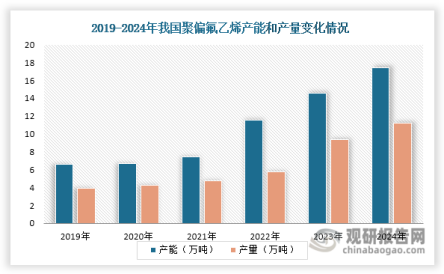
With technological advancements, the employment opportunities for PVDF are constantly expanding, covering multiple fields such as lithium-ion batteries, photovoltaic backsheets, injection molding, water treatment membranes, and coatings. Driven by both technological breakthroughs and downstream demand in China's polyvinylidene fluoride (PVDF) industry, domestic PVDF production capacity jumped from 66,000 tons in 2019 to 174,000 tons in 2024, representing an average annual compound growth rate of 21.40%.
Exceptionally gifted and possessing a powerful presence—PVDF's robust performance and wide range of applications inevitably evoke these qualities. Like Canlon, you might also think that if this superior material is properly utilized, it can truly shine in urban renewal and waterproofing repair, making even renovated homes into "good houses" where people can live in peace and contentment!
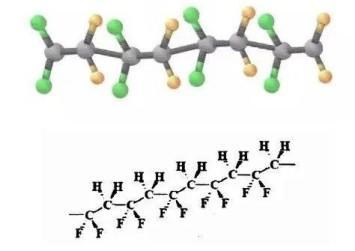
Yes! Fluorocarbon membranes have tightly packed molecular chains, with two CF bonds on the main molecular chain, each with a bond energy as high as 485 KJ/mol. Even the high-energy UV-b band in the solar spectrum cannot break these CF bonds. Furthermore, due to its hydrophobic and airtight properties, it prevents water molecule penetration. When made into waterproof tape, it exhibits excellent tensile strength, good flexibility, and easy application. The bonding between layers is strong, forming a continuous, closed system that adheres firmly to various dry surfaces, including top, flat, vertical, and inclined surfaces. With a service life of up to 30 years, it is an invaluable exposed material!
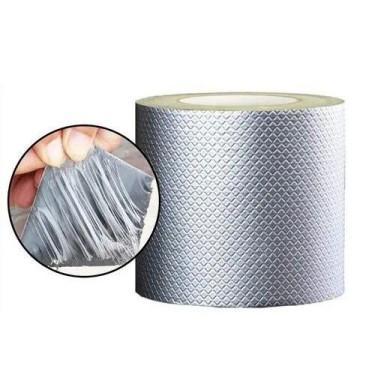
Today, we're going to introduce the main product: MST-507 PVDF fluorocarbon film butyl tape, launched by Canlon Repair, a self-operated business of Canlon Group.
2. Butyl tape: I really want to improve.
Fluorocarbon membrane butyl tape is composed of fluorocarbon membrane, butyl polymer self-adhesive layer, and release film. The adhesive layer is mainly composed of imported high-molecular multiphase polymer, supplemented with other additives and fillers, and processed according to a special production formula.
However, before we get to know fluorocarbon film butyl tape, we need to talk about the development history of this product.
Butyl tape, as the name suggests, is made primarily of butyl rubber. It boasts exceptional adhesion to various surfaces, along with excellent weather resistance, aging resistance, and water resistance, providing sealing, shock absorption, and protection for the adhered surfaces. It's popularly known as "stick it wherever there's a leak" or "it can be applied anywhere . "
Like other products on the market, butyl tape also comes in various "upgraded versions," such as adding an anti-oxidation film to improve its antioxidant properties; adding an aluminum foil layer to improve its UV resistance, high temperature resistance, and corrosion resistance, greatly improving the material's damping efficiency; and even incorporating microcapsules into the sealant to give it a certain degree of self-repair and self-sealing ability after minor punctures, etc.
If the various products in the waterproofing industry are like a large classroom, then butyl tape, as a student, is "eager to improve" !
Despite the excellent performance of aluminum foil butyl tape, some limitations have been revealed in long-term use, driving further material innovation and leading to the development of fluorocarbon film butyl tape. The main reasons are as follows:
The corrosion problem of aluminum foil: Aluminum foil is prone to corrosion in alkaline environments (such as cement, mortar, etc.) or in the high-salt air of coastal areas, forming white powdery oxides, which causes its barrier function to fail and affects long-term sealing. Fluorocarbon film, on the other hand, has extremely strong corrosion resistance, is not afraid of acids and alkalis , and its fluorine atomic structure makes it particularly suitable for the corrosion protection needs of chemical plants.
Insufficient flexibility and adaptability: Although aluminum foil provides strength, it has poor ductility. When dealing with long-term and large-scale thermal expansion and contraction deformation of building structures, repeated bending may cause aluminum foil fatigue fracture, thereby compromising the overall sealing integrity.
Extreme high temperature application scenarios: When used in sunroom and photovoltaic roof scenarios , aluminum foil substrates may crack or even break after prolonged use in extreme high and low temperature conditions, while fluorocarbon film has an extremely wide temperature resistance range (-40℃~80℃), is not easily brittle, and has a longer service life.
As a result, butyl tape has once again ushered in a new form, and fluorocarbon film butyl tape has been dubbed by many manufacturers as the " fourth generation waterproof membrane " .
3. "Integrated Waterproofing" Secondary Empowerment
We now believe that fluorocarbon film butyl tape is the preferred material for sunroom applications. Does this mean that relying solely on this superior product will guarantee a leak-proof seal?
Canlon's answer was: the idea was correct, but the details were lacking!
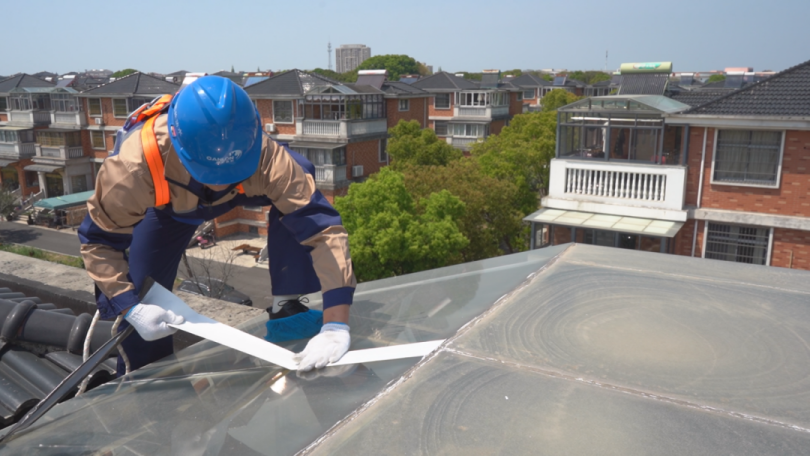
Canlon's industry-leading "integrated waterproofing" concept tells us that to achieve deep integration between the waterproofing layer and the structural layer, deep integration between the main waterproofing material and the auxiliary waterproofing material must first be achieved. In scenarios like sunrooms where sealing requirements are extremely high, the combined use of fluorocarbon membrane butyl tape and sealant is not an option, but a standard and scientific "system solution . "

The scientific approach is to combine rigidity and flexibility, and to provide systematic waterproofing.
To better address the specific needs of sunroom applications and maximize the performance advantages of MST-507 PVDF fluorocarbon film butyl tape, Canlon Repair has developed a sealant (specifically for sunrooms) . As a silicone weather-resistant sealant, it can be directly used for the bonding and assembly of metal and glass structures or non-structural components in glass curtain walls, thus its quality requirements and product grade are among the highest in glass sealants.

Traditional sealants and butyl tapes often have mismatched curing times due to differences in brand and performance. Therefore, a bonding test must be performed on the butyl tape surface before use: after a period of curing, peel it off by hand to check whether it results in cohesive failure (tears of the adhesive) or interfacial failure (complete detachment). Canlon Repair's sealant (specifically for sunrooms) is designed and developed to be deeply compatible with MST-507 PVDF fluorocarbon film butyl tape. Its adhesive cohesion and structural bonding can proceed simultaneously, resulting in a tighter final bond. This combination leverages the advantages of both materials, creating a 1+1>2 effect, theoretically ensuring that the sunroom joints will not leak for twenty years.
4. Conclusion
Over the past decade, Canlon has provided the Chinese building waterproofing industry with a number of revolutionary and innovative materials, pioneering a differentiated track centered on polymer waterproofing materials. With the concept of "integrated waterproofing" as its banner, it stands independently from traditional waterproofing material manufacturers, laying a solid foundation for "good houses, good waterproofing".
Today, Canlon Repair inherits the philosophy of Canlon Group, and is committed to "supporting the construction of good houses with good materials" and empowering the industry with advanced technology, building a new type of waterproof repair service based on "high-quality products, scientific solutions, standardized construction and digital intelligence".
We must not only build new houses into "good houses", but also strive to transform "old houses" into "good houses" that allow people to live and work in peace and contentment!