
Views: 0 Author: Site Editor Publish Time: 2026-08-13 Origin: Site


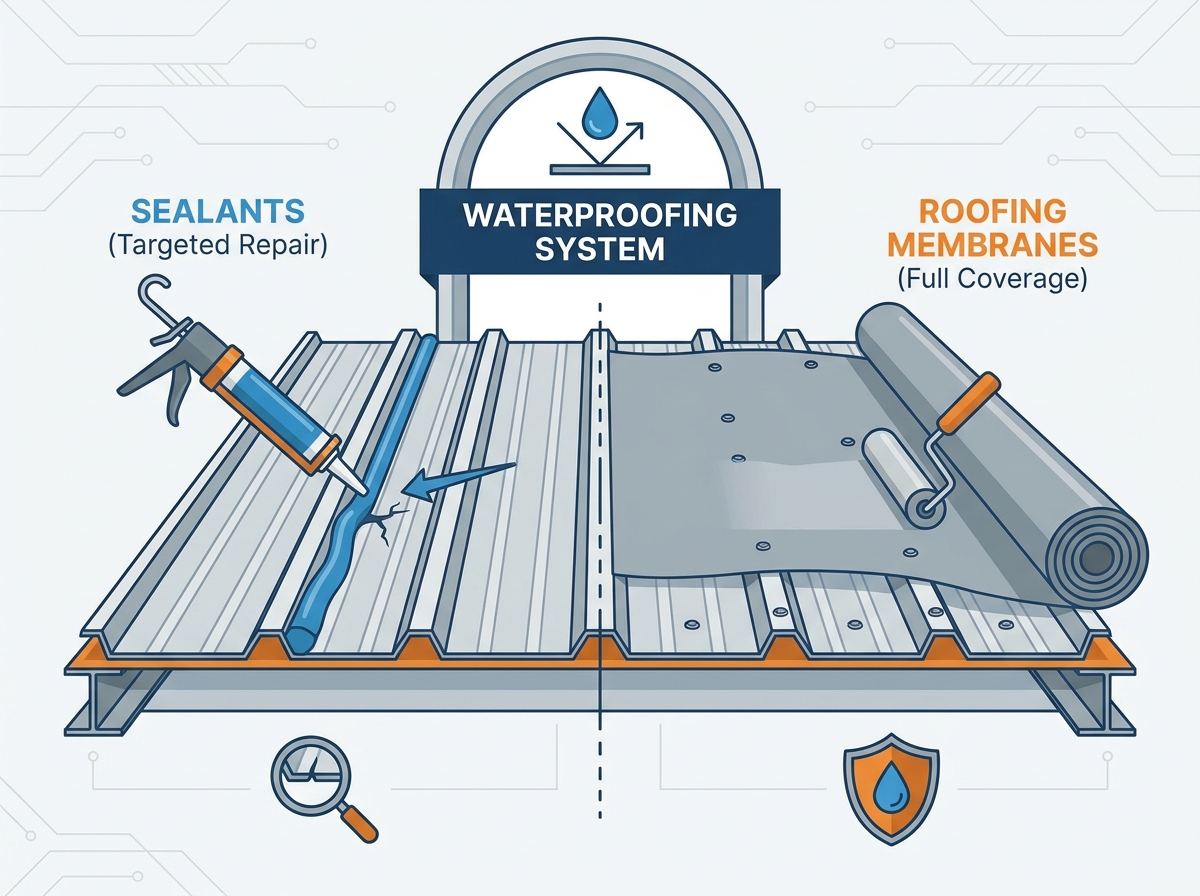
Metal roofs face a fundamental engineering challenge daily. Continuous thermal expansion and contraction create severe thermal shock across the entire deck. This daily movement inevitably compromises fasteners, stretches seams, and breaks seals around penetrations. Roof leaks represent far more than simple maintenance nuisances. They introduce severe operational risks to the building envelope. Water intrusion causes inventory damage, forces facility downtime, accelerates structural degradation through rust, and compromises overall energy efficiency. Resolving these vulnerabilities requires a comprehensive, systems-based approach. You cannot rely on a single localized patch to stop systemic water entry. True protection means pairing the correct localized Sealants with the appropriate field-applied Roofing Membranes. Together, they create a monolithic, watertight barrier capable of withstanding extreme environmental stress.
Material Compatibility Dictates Success: Adhesion profiles vary drastically between bare aluminum, galvanized steel, and factory finishes like Galvalume; selecting the wrong chemistry guarantees premature failure.
Movement Accommodation is Non-Negotiable: Effective metal roof waterproofing systems require sealants and membranes with high elongation and recovery rates to withstand daily thermal cycling.
Ponding Water Invalidates Certain Chemistries: Acrylic-based systems degrade rapidly under standing water, whereas silicone and specific polyurethanes maintain structural integrity.
Surface Preparation is the Primary Failure Point: Even top-tier roofing membranes will fail if applied over untreated oxidation, failing existing coatings, or improperly cleaned substrates.
Metal panels expand under the afternoon sun and contract during the cool night. This constant shifting creates immense mechanical stress across the entire roof assembly. Fasteners often back out of their original holes as the metal pushes and pulls against the screws. The neoprene washers beneath these fasteners dry rot under direct ultraviolet exposure, leaving the wallowed-out holes completely unprotected. Panel deflection occurs when heavy winds or foot traffic bend the metal, breaking rigid seals at the seams. Capillary action presents another major threat. Water travels uphill through tight spaces in horizontal lap seams, defying gravity to enter the building. Localized corrosion then attacks these vulnerable edges. Rust eats through the metal, destroying the structural integrity of the roof deck. You must address these specific failure modes before applying any fluid coatings.
Table: Common Metal Roof Failure Modes and Field Identification
| Failure Mode | Visual Indicator | Primary Cause |
|---|---|---|
| Fastener Back-Out | Screws sitting above the metal panel surface | Thermal expansion and contraction cycles |
| Washer Degradation | Cracked, missing, or brittle rubber under screw heads | Long-term UV exposure and ozone depletion |
| Capillary Action | Moisture tracking upward inside horizontal lap seams | Tight panel tolerances drawing water against gravity |
| Panel Deflection | Bent ribs or warped flat sections | Heavy foot traffic or severe wind uplift forces |
| Edge Corrosion | Flaking rust along the cut edges of panels | Loss of factory galvanization or protective finish |
Effective waterproofing requires a strict division of labor. Sealants and membranes perform entirely different functions on the roof deck. High-solids sealants handle extreme stress transitions. You apply them to joints, lap seams, flashing edges, and exposed fasteners. They provide localized, thick-build protection where movement is most severe. Fluid-applied membranes handle the bulk weatherproofing. You spray or roll them across the entire field of the roof to form a continuous, protective skin. Membranes also provide necessary UV protection and reflectivity to lower building temperatures. Relying on just one component guarantees failure. Complete Metal Roof Waterproofing Systems require both elements working in perfect harmony to keep the building dry.
Evaluating waterproofing materials requires objective performance metrics. You must look beyond marketing claims and examine the technical data sheets provided by the manufacturer.
Elongation: This measures how far a material can stretch before breaking, typically tested under ASTM D412. High elongation is mandatory for metal roofs to survive daily thermal shock.
Tensile Strength: This indicates durability and resistance to tearing, measured in pounds per square inch (PSI). High tensile strength prevents damage from dropped tools, foot traffic, and hail strikes.
Adhesion: This measures the pull-off bond strength to specific substrates. A product must grip galvanized steel, bare aluminum, or factory finishes tightly without delaminating.
UV Stability: This determines how well the material resists degradation from sunlight. Poor UV stability leads to rapid chalking, cracking, and brittleness.
Recovery Rate: This shows how well a stretched material snaps back to its original shape. Materials with poor recovery will stretch, sag, and eventually wrinkle.
Permeability: This measures the rate at which water vapor transmits through the cured film. Low permeability is required to stop moisture from reaching the metal substrate.
Silicone sealants offer exceptional UV resistance and flexibility. They remain highly elastic even after decades of direct sun exposure. This makes them the optimal choice for critical transition zones. You should use them in valleys, along roof edges, and over panel overlaps. They encapsulate exposed fasteners perfectly, creating a flexible watertight cap. When selecting silicone for metal, you must specify a neutral-cure formulation. Acetoxy-cure silicones release acetic acid during the curing process, which actively corrodes bare metal. However, silicone comes with distinct trade-offs. The surface remains slightly tacky, making it prone to dirt pick-up. You cannot paint over silicone. Nothing sticks to silicone except more silicone. Any subsequent repairs require silicone-based materials, limiting your future maintenance options.
Polyurethane sealants deliver superior adhesion profiles. Manufacturers engineer them specifically for bare aluminum and aged galvanized steel. They cure through a reaction with atmospheric moisture into a tough, durable rubber. This makes them highly resistant to physical abrasion and heavy foot traffic. If HVAC technicians frequently drop tools on the roof, polyurethane provides the necessary impact resistance. Hybrid sealants combine the strength of polyurethane with the flexibility of other polymers, offering a balanced performance profile. The main trade-off is lower inherent UV resistance compared to silicone. Polyurethanes often require a protective topcoat to prevent chalking and surface degradation. They also feature longer curing times, which can delay project timelines during unpredictable weather patterns.
Premium elastomeric acrylics offer excellent strength and adaptability. They shield metal roofs effectively in the right environments. Acrylics are highly cost-effective and easy to tool during application. They allow for simple water cleanup, which speeds up steep-slope applications and reduces chemical exposure for the installation crew. However, performance varies wildly based on product quality. Lower-grade acrylics lose their plasticizers and become brittle over time. They cure through water evaporation, meaning high humidity or low temperatures will halt the curing process entirely. They are also highly susceptible to re-emulsification. If exposed to ponding water, acrylic sealants will soften, dissolve, and wash away, leaving the seams completely exposed.
Butyl tapes and rubber mastics provide unmatched impermeability to water and vapor. They remain permanently tacky, never fully curing into a hard solid. This makes them optimal for concealed lap seams. You place them between metal panels before fastening them together during initial construction or panel replacement. They also work well for quick, temporary patch repairs when rain is imminent. Unfortunately, rubber roof sealants and butyl tapes severely lack UV resistance. They will degrade rapidly under direct sunlight, drying out and cracking within months. In extreme high-temperature environments, they can ooze or bleed out from under the metal seams, creating an unsightly mess that attracts dirt and debris.
Liquid-applied silicone creates a continuous, highly flexible barrier across the roof deck. It stands as the industry standard for flat or low-slope metal roofs. Silicone easily handles areas prone to severe ponding water without degrading or re-emulsifying. It reflects sunlight efficiently, lowering interior cooling demands and reducing the thermal shock on the metal panels. High-solids silicone formulations allow contractors to achieve the required mil thickness in a single pass, reducing labor costs. The primary trade-off is a high initial material cost. Silicone surfaces also become extremely slippery when wet or covered in morning dew, creating severe fall hazards for maintenance crews. Furthermore, once you apply silicone, you face challenges recoating the roof with non-silicone products in the future.
Polyurethane membranes provide extreme durability and impact resistance. They withstand severe hail strikes and heavy mechanical foot traffic better than any other fluid-applied system. They offer excellent adhesion to properly primed metal surfaces. Installers typically use a two-component, multi-coat system to maximize performance. They apply an aromatic base coat for foundational strength, thickness, and waterproofing capability. They follow this with an aliphatic topcoat for superior UV stability and color retention. The installation process presents logistical challenges. Polyurethanes emit strong odors and volatile organic compounds (VOCs) during application. This requires careful ventilation planning to prevent fumes from entering the building's HVAC intakes. They also require strict mixing ratios and have a limited pot life once catalyzed.
Acrylic elastomeric coatings remain a popular, budget-friendly option for steep-slope metal roofs. They are highly reflective, providing immediate cool roof benefits and reducing energy consumption. The application process is straightforward, requiring less specialized spray equipment than two-component polyurethanes. Cleanup only requires water, making staging and demobilization highly efficient. However, acrylics are strictly limited to roofs with positive drainage. They cannot survive standing water in blocked gutters or deflected panel pans. They also exhibit a lower overall lifespan in harsh climates compared to silicone or polyurethane systems. You must schedule more frequent recoating cycles to maintain their protective qualities and prevent the film from wearing thin over time.
Table: Fluid-Applied Membrane Performance Comparison
| Membrane Chemistry | Ponding Water Resistance | UV Stability | Impact Resistance | Application Complexity |
|---|---|---|---|---|
| Silicone (High Solids) | Excellent | Excellent | Low to Moderate | Moderate (Single component) |
| Polyurethane (Aromatic/Aliphatic) | Good | Excellent (with Aliphatic topcoat) | Excellent | High (Multi-component mixing) |
| Acrylic Elastomeric | Poor | Good | Low | Low (Water cleanup) |
Regional extremes dictate your material selection framework. A facility in a desert climate faces a punishing UV index and extreme surface temperatures. This environment demands silicone membranes to prevent rapid degradation and chalking. Conversely, a facility in a northern climate experiences severe freeze-thaw cycles and heavy snow loads. This demands the high-elongation properties and abrasion resistance of polyurethane to handle extreme thermal shock and ice movement. Coastal environments introduce salt spray, requiring specific corrosion-resistant epoxy primers before any membrane application. You must evaluate the local weather patterns, historical hail data, and average rainfall before selecting your waterproofing chemistry.
You cannot apply new coatings blindly over existing substrates. Adhesion testing is mandatory for every project. Factory finishes, like Kynar 500, feature Teflon-like properties designed to shed dirt and water. They repel most standard coatings and require specialized etching primers to achieve a mechanical bond. Aged galvanized steel requires rust-inhibiting treatments and phosphoric acid converters before coating. Bare aluminum demands specific adhesion promoters to prevent peeling. If the roof already has an elastomeric coating, you must identify its chemistry through solvent testing. Applying polyurethane over old silicone guarantees immediate delamination and catastrophic failure. Always perform an ASTM D903 pull-test to verify the bond strength before full-scale application.
Installation procedures must not disrupt daily facility operations. You must assess the impact of VOC emissions and chemical odors. This is absolutely mandatory for food processing plants, pharmaceutical facilities, and healthcare centers. Strong solvent smells can contaminate food products, ruin sterile environments, or sicken patients. In these environments, you must specify low-VOC, high-solids, or water-based systems. Additionally, you must verify fire ratings. Ensure the selected system meets local building codes and insurance requirements for exterior fire exposure, typically requiring a Class A fire rating. Failure to verify these compliance metrics can result in project shutdowns and severe liability.
Surface preparation dictates the ultimate success of the project. Nearly 90% of all coating failures stem from poor prep work. You must outline strict requirements for the installation crew and verify their execution through daily inspections.
Power wash the entire roof surface at 3500+ PSI using a rotating zero-degree tip to remove dirt, chalking, and loose paint.
Apply specialized industrial degreasers to areas contaminated by exhaust vents, kitchen hoods, or HVAC units.
Remove all incompatible legacy sealants, dried mastics, and failing tapes using mechanical scrapers and wire brushes.
Treat all visible surface oxidation with industrial-grade rust-inhibiting primers or rust converters.
Perform localized adhesion pull-tests to verify the primer has bonded correctly to the prepared substrate.
You must treat every penetration, seam, and fastener before applying the field membrane. This detailing process requires meticulous attention and cannot be rushed. Installers must use the "three-course" detailing method on all horizontal lap seams, ridge caps, and valleys. First, they apply a thick 1/16-inch layer of base sealant. Second, they embed a reinforcing polyester fabric into the wet sealant, ensuring no wrinkles or fishmouths. Third, they apply a top layer of sealant to encapsulate the fabric entirely. For fasteners, crews must tighten or replace any loose or stripped screws. They then encapsulate every single fastener head with a generous dollop of high-solids mastic, ensuring the sealant extends past the washer onto the metal panel.
Liquid membranes are highly sensitive to environmental conditions during application. You must monitor the weather constantly using digital psychrometers. Applying coatings near the dew point causes invisible condensation to form on the metal. This moisture barrier prevents adhesion and causes massive blistering. The ambient temperature must remain at least 5 degrees Fahrenheit above the dew point during application and curing. High humidity severely impacts the curing process of moisture-cured polyurethanes, causing them to cure too rapidly and trap solvents. Applying acrylics outside of manufacturer-specified ambient temperature ranges leads to freezing or flash-drying. You must strictly enforce curing windows to ensure the membrane forms a solid, protective film before the next rain event.
Table: Environmental Application Constraints
| Environmental Factor | Acceptable Range | Risk of Non-Compliance |
|---|---|---|
| Ambient Temperature | 50°F to 100°F (Varies by product) | Freezing, flash-drying, or improper film formation |
| Dew Point Spread | Minimum 5°F above dew point | Invisible moisture barrier causing total delamination |
| Relative Humidity | 20% to 85% | Blistering in polyurethanes; wash-off in acrylics |
| Impending Rain | Clear window for 2 to 24 hours | Material wash-off and environmental contamination |
As a specialist in waterproofing and roofing materials, CANLON combines advanced R&D, engineering expertise, and manufacturing capabilities to support demanding building and infrastructure projects. With seven manufacturing plants and a portfolio covering polymer waterproofing membranes, roofing membranes, coatings, and auxiliary materials, CANLON provides a strong technical foundation for long-term waterproofing applications.
Take the following steps to secure your facility and execute a successful waterproofing project:
Schedule a professional roof audit to identify existing moisture intrusion, structural decking damage, and active failure modes.
Request core samples and localized adhesion pull-tests to verify chemical compatibility with your specific metal finish and existing coatings.
Require contractors to submit a detailed surface preparation plan, including specific rust mitigation steps, pressure washing PSI, and primer selection.
Specify the three-course detailing method for all seams, penetrations, and transitions in your project contract to ensure watertight integrity.
Establish strict weather monitoring protocols, requiring daily logs of ambient temperature, humidity, and dew point before any material application begins.
A: Yes, but it requires meticulous preparation. You must thoroughly clean the existing acrylic to remove all dirt and chalking. In most cases, you must apply a specialized bleed-blocking primer to ensure proper bonding. Always perform localized adhesion pull-tests before applying silicone over any aged coating to guarantee the new membrane will not delaminate.
A: Lifespans depend heavily on the chemistry and maintenance. High-quality silicone and polyurethane systems typically last 15 to 20 years. Acrylic systems generally last 10 to 15 years, provided there is positive drainage. Routine inspections, clearing debris, and prompt touch-ups of localized damage will significantly extend the life of any applied system.
A: High-solids silicone mastics and polyurethane sealants are the best choices. Silicone offers superior UV resistance, making it ideal for exposed fasteners and panel edges. Polyurethane provides tougher abrasion resistance for areas expecting foot traffic. Both encapsulate the fastener head completely, preventing water entry during thermal expansion.
A: Peeling usually results from three main issues. First, applying the coating over untreated rust or dirt prevents a solid bond. Second, applying acrylics in areas with ponding water causes the material to soften and re-emulsify. Third, failing to use the correct primer on factory finishes like Kynar prevents the coating from adhering properly.
A: Almost always. Primers are mandatory if the roof has visible oxidation, bare aluminum, or factory finishes like Galvalume. Primers lock down rust, promote adhesion, and prevent chemical reactions between the metal and the new membrane. Always consult the membrane manufacturer's technical data sheet for specific primer requirements.
A: Aromatic polyurethanes are incredibly tough and durable, making them excellent base coats, but they chalk and degrade under UV light. Aliphatic polyurethanes are highly UV-stable and resist fading, making them the perfect topcoat. Installers usually pair them together to create a system that is both impact-resistant and sun-proof.
A: No. Rubber and butyl patch tapes are excellent for concealed waterproofing between metal panels. However, they fail as permanent exposed fixes because they severely lack UV resistance. Direct sunlight quickly degrades the rubber, causing it to dry out, crack, and eventually leak. Always use UV-stable sealants for exposed repairs.