
Views: 0 Author: Site Editor Publish Time: 2026-10-19 Origin: Site


Single-ply roofing membranes are widely used on commercial, industrial, and residential flat roofs. They provide a lightweight waterproofing layer and can suit different roof structures and installation requirements.
Choosing the right membrane involves more than comparing material prices. Building use, roof substrate, climate, drainage, insulation, and maintenance requirements all affect system performance.
This guide compares TPO and PVC roofing membranes, explains key installation considerations, and outlines how to select a suitable single-ply roofing solution for your project.
A single-ply roofing system uses a prefabricated membrane as the primary waterproofing layer. Depending on the system design, the membrane can be mechanically attached, fully adhered, or installed with another approved method.
Single-ply membranes are used on many low-slope roofs because they can cover large roof areas without multiple layers of roofing sheets. However, performance depends on correct material selection, substrate preparation, seam welding, and detailing around roof penetrations.
For an overview of available systems, explore CANLON roofing solutions.
TPO and PVC are two thermoplastic membranes used in single-ply roofing. Both can use hot-air welding to join overlapping sheets. Their formulation, product options, and suitability for specific environments differ.
TPO combines polypropylene with ethylene-propylene rubber-related materials. CANLON TPO roofing membranes are designed for roofing applications and offer weldable seams, flexibility, and weather resistance.
TPO can be considered for commercial and industrial buildings where the roof design, substrate, and local climate suit the selected membrane. White TPO surfaces can also reflect solar radiation, although actual energy performance depends on the full roof assembly and operating conditions.

Learn more about CANLON TPO roofing membrane.
PVC roofing membranes are made from polyvinyl chloride with additives that help provide flexibility and other performance characteristics. CANLON PVC roofing membranes are hot-air weldable and are designed to provide weather resistance and resistance to various chemicals and industrial pollutants.
PVC may be worth evaluating for buildings where exposure to certain chemicals or industrial pollutants is a concern. Buyers should confirm compatibility with the actual substances present and review the product's technical documentation before specifying a system.

See the product details for CANLON PVC roofing membrane.
| Evaluation factor | TPO | PVC |
|---|---|---|
| Seam joining | Hot-air welding | Hot-air welding |
| Typical considerations | Weather exposure, roof design, and reflectivity | Weather exposure and compatibility with chemicals or pollutants |
| Installation options | Depend on membrane type and roof substrate | Depend on membrane type and roof substrate |
| Selection priority | Match the membrane to the building and installation design | Match the membrane to the building and exposure conditions |
Neither material is best for every roof. Compare product specifications, installation requirements, and project conditions before making a final decision.
Commercial roofs may contain HVAC equipment, vents, pipes, access routes, and other penetrations. These details require careful waterproofing and regular inspection.
For warehouses, factories, offices, and other large buildings, evaluate:
Roof deck material and structural capacity.
Membrane type and reinforcement.
Insulation and vapor-control requirements.
Drainage layout and roof penetrations.
Wind uplift requirements and attachment design.
Maintenance access and expected rooftop traffic.
CANLON offers different TPO and PVC membrane types for specific roof substrates and installation methods. Review the CANLON single-ply roofing solution to understand the available configurations.
Residential flat roofs also need reliable drainage, durable detailing, and a membrane suited to the building structure. Roof terraces, extensions, and exposed flat roofs may have different requirements.
Before selecting a membrane, consider the roof's visibility, exposure to sunlight, access for maintenance, and compatibility with the existing substrate. If the roof will support regular foot traffic, the design may require additional protection or designated walkways.
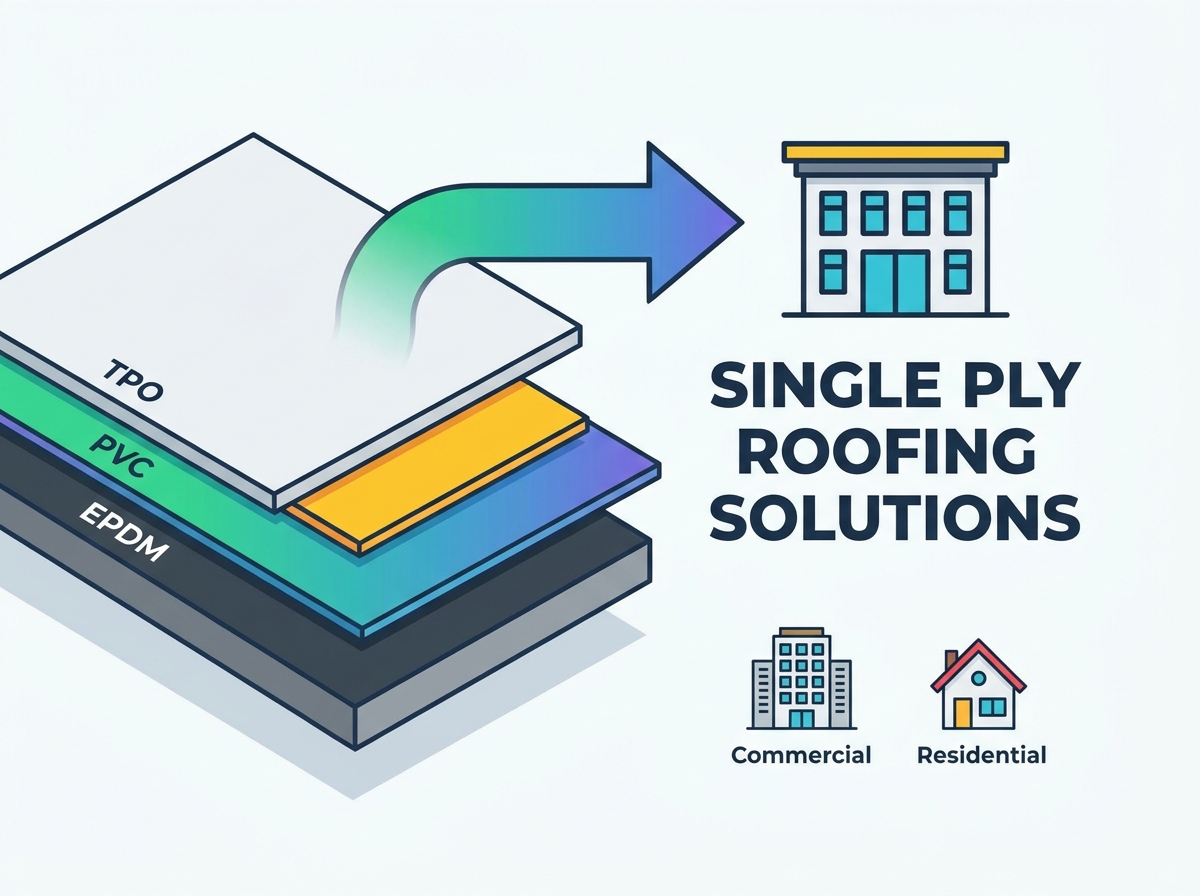
Single-ply membranes may be mechanically attached or fully adhered, depending on the membrane type, substrate, and system design.
Mechanically attached systems use approved fasteners to secure the membrane assembly. Fully adhered systems use compatible adhesives to bond the membrane to the specified substrate or cover board.
The right method depends on the roof deck, wind uplift design, insulation layout, and manufacturer's installation instructions. Do not select an attachment method based on cost alone.
The roof substrate should be suitable for the selected system and prepared according to the manufacturer's requirements. Wet insulation, uneven surfaces, and incompatible materials can compromise roof performance.
For refurbishment projects, assess the existing roof before installing a new membrane. Remove or address wet and damaged materials where required, and confirm whether the existing roof assembly is suitable for recovery.
Seams, drains, parapets, skylights, pipes, and equipment supports require careful detailing. For TPO and PVC systems, installers must use the specified hot-air welding procedures and check completed seams.
Workmanship, weather conditions, equipment settings, and quality control can affect seam integrity. Use qualified installers who follow the product instructions and project specifications.
Even a suitable membrane can experience problems if drainage, installation, or maintenance is inadequate.
Key practices include:
Inspect roof drains and remove accumulated debris.
Check seams, flashings, and penetrations for signs of damage.
Use designated walkways where regular roof access is necessary.
Arrange prompt repairs when damage or water entry is identified.
Follow the membrane manufacturer's cleaning and maintenance instructions.
Standing water should be assessed against the roof design and product requirements. Do not assume that every membrane or roofing assembly is suitable for prolonged ponding.
For existing roofs, periodic inspections can help identify small defects before they lead to more extensive repairs. Inspection frequency should reflect climate, roof use, and manufacturer recommendations.
Before specifying a membrane, review the following factors:
Building use: Identify whether the project is residential, commercial, or industrial.
Roof substrate: Confirm whether the deck is metal, concrete, or another material.
Environmental exposure: Consider UV radiation, temperature changes, wind, and potential chemical exposure.
Installation design: Confirm the attachment method, insulation, drainage, and detailing requirements.
Product documentation: Review technical data, applicable test results, and warranty conditions.
Long-term maintenance: Plan inspections, roof access, and repairs.
CANLON provides TPO and PVC single-ply roofing options for different roof substrates and installation approaches. The final selection should be based on the actual project requirements and the applicable product documentation.
Choosing a single-ply roofing membrane requires a clear understanding of the building, substrate, climate, and installation conditions. TPO and PVC offer different material characteristics, and neither is the right choice for every project.
Careful product selection, correct installation, effective drainage, and routine maintenance all contribute to roof performance. Review the available CANLON roofing products and confirm the technical requirements before specifying a system.
A single-ply roofing membrane is a prefabricated sheet used as the primary waterproofing layer on a roof. Installation methods depend on the product and roof design.
Both can use hot-air-welded seams, but their formulations and chemical resistance differ. The right choice depends on roof conditions and project requirements.
Yes. They can be considered for residential flat roofs when the membrane, substrate, drainage, and installation method are suitable for the project.
Sometimes. The existing roof must be assessed for moisture, damage, structural suitability, and applicable building-code requirements before a recovery system is selected.
Use correct installation procedures, maintain drainage, inspect seams and penetrations, limit unprotected foot traffic, and repair damage promptly.