
On the path of exploring green building and sustainable development, universities are pioneers of innovation, while the support of industry provides a solid foundation for the implementation of these innovations. The Sustainable Future Challenge ( SFC ) is a global team competition for universities worldwide, aiming to respond to the United Nations Sustainable Development Goals and China's "dual-carbon" strategy. It is an upgraded version of the International Solar Decathlon (SDC), which is known as the "Olympics" of the solar energy industry.

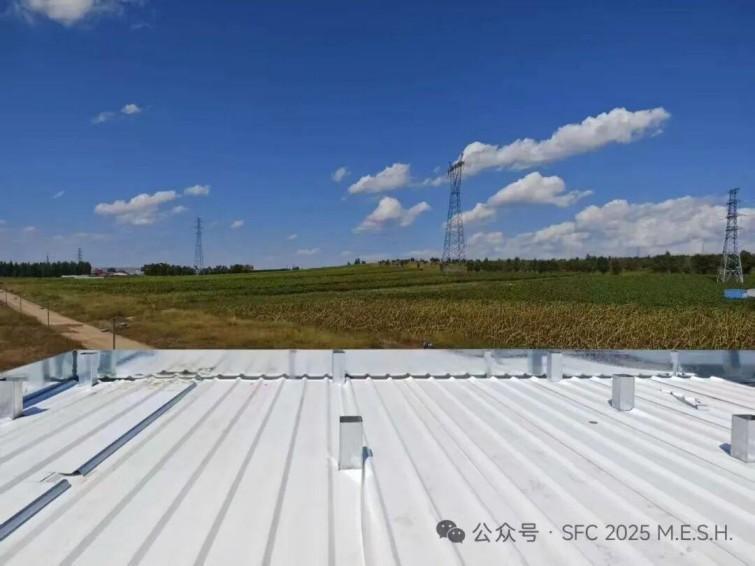
On a scorching summer day, have you ever felt that city centers are hotter than suburbs? It's not an illusion. Meteorological data shows that urban core temperatures are often 3-5°C higher than surrounding suburbs—this is the well-known "urban heat island effect." One of the key culprits behind this phenomenon is the dark roofs above our heads. Traditional asphalt roofs and black waterproofing membranes can reach surface temperatures of 70-80°C under intense sunlight. Like giant "heat-absorbing panels," they convert solar radiation into heat, continuously baking the city above. The emergence of white TPO cool roofs is changing this situation—it's like applying an "ice pack" to buildings, not only cooling the building itself but also quietly mitigating the heat of the entire city.

Supermarkets, food, beverages, logistics... these are the projects in commercial buildings that are closest to daily consumer needs, and they are also the projects that can best enhance the happiness of the general public. Reliable building waterproofing quality not only protects the business and profits of commercial entities, but also provides a solid guarantee for convenient living and healthy eating. With its excellent products and systems, Canlon empowers the industrial development of well-known brands in the supermarket and consumer sector, laying a solid foundation for modern quality living.
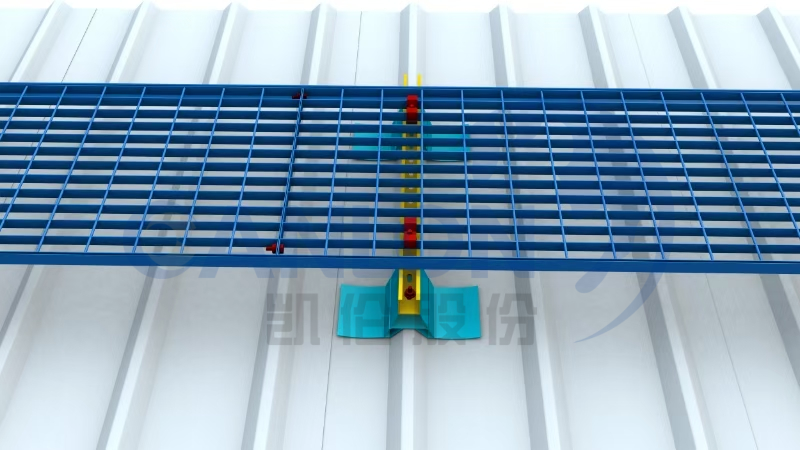
Recently, Typhoon "White Dolphin," the 11th typhoon of the year, made landfall twice along the coast of Zhejiang Province, bringing torrential rains and gale-force winds as it moved northward. Its impact extended across Zhejiang, Shanghai, Jiangsu, Anhui, Hubei, Henan, Hebei, and beyond. Meteorological forecasts indicate that after its remnant system combines with cold air, the Beijing-Tianjin-Hebei region and Liaoning will also experience significant rainfall. Typhoons test not only a city's drainage infrastructure but also push building roofing systems to their limits. Intense rainfall combined with instantaneous gale-force winds subjects roofs to immense water pressure and powerful wind uplift forces equivalent to a Category 17 super typhoon—any weak link can lead to leakage or even structural failure. In this extreme weather challenge, Canlon's polymer waterproofing systems delivered a performance that stands up to scrutiny.

In high-end industrial sectors such as new energy, precision manufacturing, and biopharmaceuticals, buildings are no longer mere shelters from wind and rain. A lithium battery plant workshop must strictly maintain temperatures below 25°C and humidity below 30%; otherwise, battery performance and yield rates are directly affected. If air quality fluctuates in a semiconductor cleanroom, the entire production line may face shutdown. In such scenarios, the roofing system is no longer just a waterproofing layer, but a "Super Shield" that safeguards production safety, product quality, and operational efficiency. Polymer waterproofing membranes represented by TPO, with their comprehensive properties of weatherability, energy-saving high reflectivity, chemical corrosion resistance, and wind uplift resistance, are becoming the preferred choice for high-end industrial plant roofing projects.

Remember when Super Typhoon Yagi made landfall in Wenchang, Hainan and Xuwen, Guangdong with winds exceeding Category 17? Many traditional metal roofs along the coast were torn off, corroded, and leaked, posing a severe challenge to transportation hubs. At that time, Canlon TMP® Integrated Roofing Panels proved their strength. With its top-notch wind uplift resistance and long-lasting corrosion resistance, TMP integrated panels withstood wind damage during the roof renovation projects of five major stations on the Guangdong-Hainan Railway: Wanning Hele Station, Xuwen Station, Beigang Station, Wenchang Station, and Haikou East Station. The practical results proved the benchmark solution of "no roof lifting, no corrosion, and no leakage"!

Bengbu City in Anhui Province is a national comprehensive transportation hub, an industrial transfer and agglomeration area in northern Anhui, and a green agricultural product production, processing and supply base in the Yangtze River Delta. The famous Bengbu Port is the largest port on the Huai River. In recent years, driven by the "dual carbon" strategy, Bengbu Economic Development Zone is striving to build a new cluster area that undertakes industrial transfers from Shanghai, Jiangsu and Zhejiang, focusing on leading industries such as equipment manufacturing, new energy and new materials and modern logistics. This brings us to our protagonist today - Bengbu Lingang Assembly and Manufacturing Industrial Park.

With the development of the drone industry and the low-altitude economy, more and more rooftops have become the simplest "landing pads," and even food delivery services can land here. Short video bloggers shoot viral aerial footage from high points in the city, and company employees can play tennis and have afternoon tea on the rooftop. Even the brand image of the entire company, and even the appearance of the city's landmark buildings, are repeatedly posted on short video platforms through aerial footage of rooftops. The roof is no longer just a "lid" for a building, but its brand-new "face". Let's talk about why high-quality buildings in the future will increasingly need a roof that is "sky-high and photogenic".

Recently, the Hainan Provincial Department of Housing and Urban-Rural Development officially released the "Hainan Provincial Technical Standard for Metal Roofing" (DBJ 46-075-2025). This standard, tailored to Hainan's unique geographical characteristics of high temperature, high humidity, high salinity, high radiation, heavy rainfall, and frequent typhoons, establishes comprehensive technical specifications covering the entire process from material selection, design and construction, quality acceptance to maintenance and repair. It will officially take effect on April 1, 2026. As a participating unit in the standard's drafting, Canlon was deeply involved in the standard's development, providing crucial support for its practicality and implementation through its core products such as polymer waterproof membranes and metal composite panels, as well as its engineering experience.