
Views: 0 Author: Site Editor Publish Time: 2026-01-28 Origin: Site


Pick waterproofing materials that fit your weather. Cold places need flexible materials. Hot places need materials that block UV rays.
Think about how long each membrane lasts and its price. EPDM costs less and lasts a long time. PVC and TPO give more benefits but cost more.
You must take care of your roof often. Check your roof two times each year for cracks and trash. This helps stop leaks and makes your waterproofing last longer.
Liquid membranes are simple to put on and can lower work costs. They are good for roofs with tricky shapes.
Self-healing membranes can help you spend less on repairs. They fix small cracks by themselves. This makes them great for busy areas.
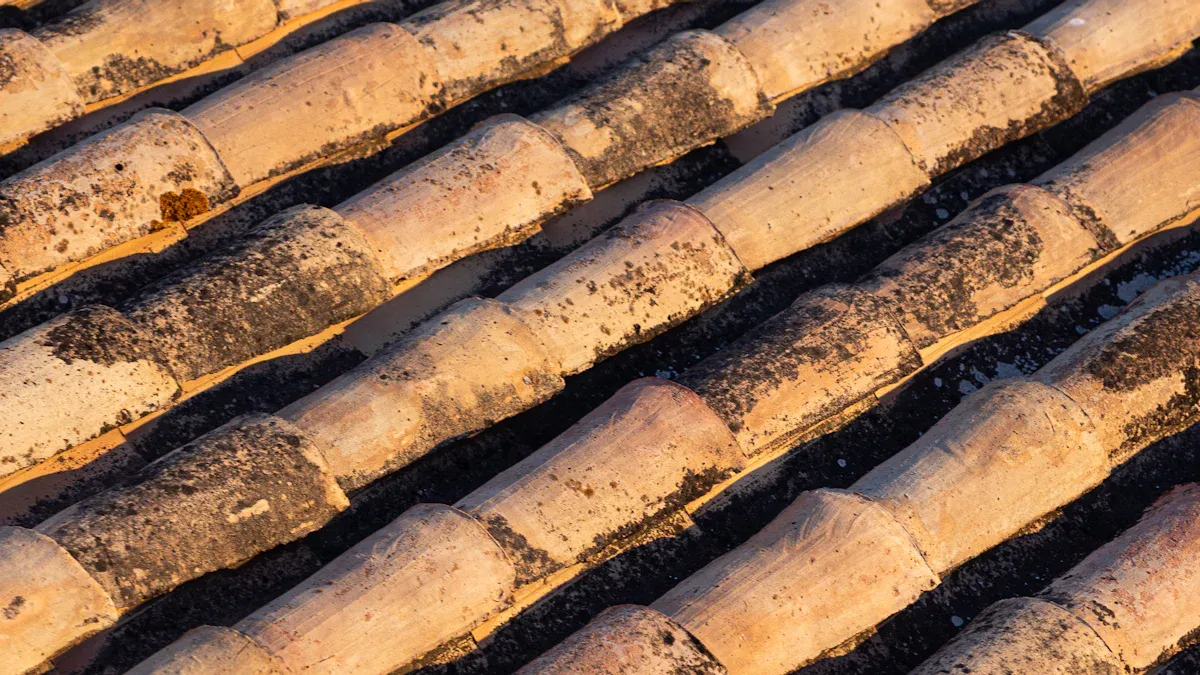
Bituminous membranes are good for waterproofing flat roofs and basements. They use modified bitumen, which makes them flexible and strong. There are self-adhered and torch-applied types. Bituminous membranes stop water and block UV rays. They work in both hot and cold places. The table below shows how each product works in different weather:
Bituminous membranes are used in bathrooms, pool areas, and utility rooms. You should check for UV damage and moisture problems. Modified bitumen is a strong waterproof roofing membrane, but it may not look very nice.
Tip: Pick self-adhered membranes for easy use and better sticking on wet surfaces.
Liquid-applied membranes make a smooth waterproof layer. You can use acrylic, polyurethane, or silicone coatings. These materials go on with a roller or sprayer. They stretch well and keep water out. The table below compares how they work:
Material | Water Resistance | UV Stability | Elongation Rate | Durability |
|---|---|---|---|---|
Polyurethane | Superior | Moderate | 300-500% | High |
Acrylic | Moderate | High | 200-400% | Moderate |
Silicone | Moderate | Excellent | Wide range | Moderate |
Liquid-applied membranes cost about $5–$10 for each square foot. You can install them fast. These coatings protect roofs from water and UV rays. They are good for flat and low-slope roofs. Polyurethane is best for stopping water, and silicone is best for blocking UV rays. Acrylic is a green choice for places with mild weather.
EPDM rubber membrane lasts a long time on flat and low-slope roofs. It can last 20 to 50 years. You should check the roof twice a year to keep it working well. EPDM is cheap and simple to put on. It stands up to UV rays and bad weather. The table below lists the good and bad points:
Advantages of EPDM | Disadvantages of EPDM |
|---|---|
Cost-effective | Vulnerable to punctures |
Durable | Aesthetic limitations |
Easy to install | Weakness in seams and adhesives |
Long lifespan (20+ years) | Can be punctured easily |
Resistant to UV rays and extreme weather | Not visually appealing |
Affordable materials and installation | Weak seams and adhesive bonds |
Minimal maintenance required | Prone to punctures |
EPDM can have weak seams and holes, so checking often helps stop leaks. EPDM is a common waterproof roofing membrane for homes and businesses.
PVC and tpo membranes give strong waterproofing and save energy. PVC membranes resist chemicals, so they are good for roofs with harsh chemicals. TPO membranes reflect sunlight, which keeps roofs cooler and saves energy. The table below shows their features:
Feature | PVC | TPO |
|---|---|---|
Chemical Resistance | Superior; withstands harsh chemicals | Moderate; not as robust in heavy exposure |
Energy Efficiency | Good, but less reflective than TPO | Excellent; reflective surface reduces heat absorption |
You should watch for problems like holes, leaks at seams, and UV damage. If installed wrong, water can pool and cause rot. These membranes are used on business buildings and green roofs.
Self-healing membranes use special polymers that fix small cracks by themselves. They need less fixing and help roofs last longer. These membranes are good for busy areas like rooftops and foundation walls. Self-healing membranes stop water from getting in and keep roofs safe. They cost more at first, but you save money because you fix them less. Modified bitumen and self-adhered membranes often have self-healing features for better results.
Note: Self-healing membranes work best where temperatures change a lot or people walk on the roof often.
Synthetic underlayment is stronger and lasts longer than felt. It protects against moisture and UV rays. Synthetic underlayment is light and not slippery, so it is safer and faster to install. You can use it for asphalt shingles, cedar shakes, and reroofing. The main benefits are:
Stronger and lasts longer
Better moisture protection
More UV resistance
Safer and faster installation
Saves money over time
Synthetic underlayment is easy to use and put in place. You attach it with cap nails or staples. Overlap the seams and use flashing tape for important spots. Synthetic underlayment lasts longer and costs less to keep up. It is a top pick for ice and water shields.
High-performance waterproof membranes give the best protection for business roofs. They keep water out, let air through, and bend easily. Top brands are Gore-Tex, Toray Industries, and SympaTex Technologies. The table below lists their best features and brands:
Performance Metrics | Industry Leaders |
|---|---|
Water Resistance | Gore-Tex |
Breathability Ratings | Toray Industries |
Durability | Climashield |
Flexibility | SympaTex Technologies |
Polartec | |
HyVent (The North Face) | |
OutDry Technologies | |
Dermizax (Toray) | |
eVent Fabrics | |
Pertex | |
Millet (Schoeller) | |
Sealon Technologies |
These membranes are used for heavy loads, walking areas, and waterproofing below ground. High-performance membranes keep water out and work well even when used a lot.
Asphalt-saturated felt is an old waterproofing material. It is used under roofs in homes. It lasts 12 to 20 years and works best in dry places. Asphalt felt soaks up water and can rip easily. You put it on with staples or nails. The table below shows the costs:
Material Type | Cost per Square Foot |
|---|---|
Felt 15-pound | 5 cents |
Felt 30-pound | 10 cents |
Vapor impermeable synthetic | 11 to 15 cents |
Vapor permeable synthetic | 20 to 90 cents |
Asphalt-saturated felt is cheap, but synthetic underlayment gives better waterproofing and lasts longer.
When you look at roof waterproofing membranes, you should think about how long they last, how much they cost, how easy they are to put in, and how much work they need. Every membrane has good and bad points. The best one for you depends on your roof and what you want.
You want a membrane that will last a long time. EPDM can last more than 30 years. PVC can last up to 30 years and fights off chemicals. TPO lasts a long time, but not as long as EPDM or PVC. Modified bitumen lasts about 15 to 20 years. Warranties help you know how tough a membrane is:
Warranty Type | Duration | Coverage Description |
|---|---|---|
Materials-Only Warranty | 5 to 30 years | Only pays for materials if they are bad. |
Labor and Materials Warranty | Varies | Pays for both materials and work, so you get more protection. |
No Dollar Limit (NDL) Warranty | Varies | Pays for all repairs or new parts with no limit. |
Tip: If the warranty is longer, the membrane usually lasts longer and you worry less.
How much you pay is important when picking a roof waterproofing membrane. EPDM costs less. TPO and PVC cost more, but give extra benefits. Modified bitumen is a good price for many jobs.
Membrane Type | Average Cost per Sq. Ft. (Installed) | Lifespan | Best Feature |
|---|---|---|---|
EPDM | $4–$8 | 20–30 years | Lasts long, saves money |
TPO | $5–$9 | 15–25 years | Saves energy |
PVC | $6–$12 | 20–30 years | Tough and fights chemicals |
Modified Bitumen | $4–$7 | 15–20 years | Easy to install |
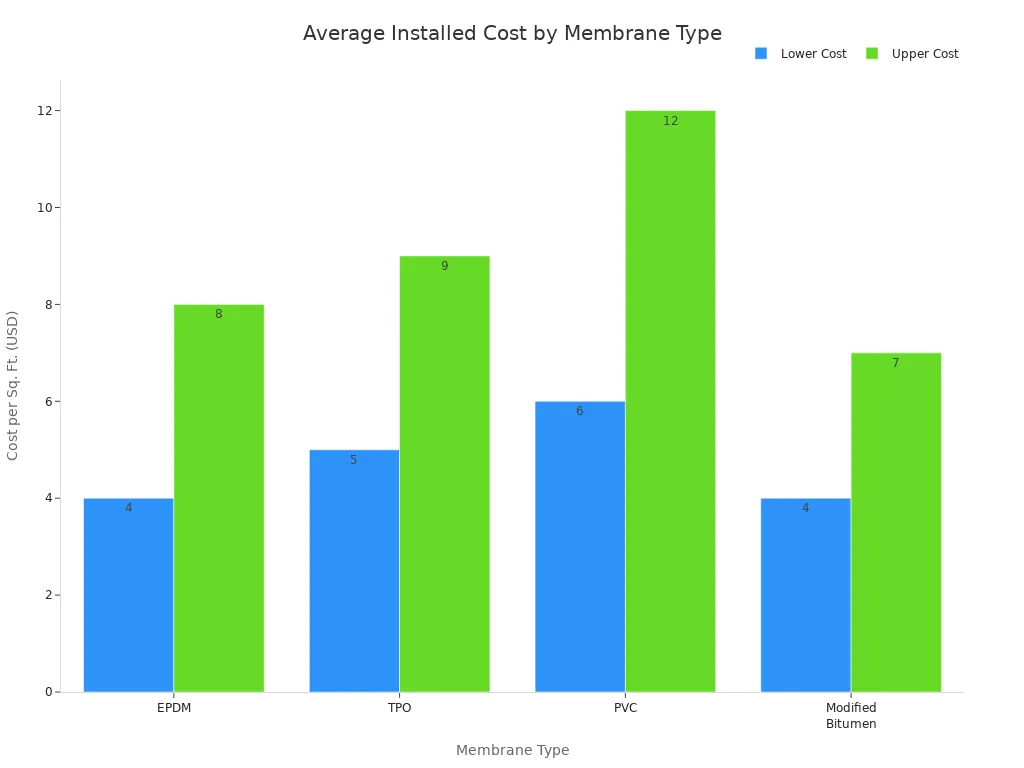
The price can change if your roof is big, if workers charge more, if you need extra insulation, or if you have to take off old roofing.
You want a membrane that is easy to put on. Sheet membranes like PVC and TPO are made in factories, then cut and joined together. This makes labor cost more. Liquid membranes go on faster and cost less to install. Cold-applied membranes can save up to 60% on labor. Liquid membranes work well on roofs with lots of shapes.
Sheet membranes: Cost more for materials and work, need more steps.
Liquid membranes: Cost less for work, good for tricky roofs.
Taking care of your roof keeps it safe. EPDM is easy to fix and stands up to sun and bad weather. PVC needs heat welding to repair, which costs more. Bituminous membranes need careful work and regular checks. You should check your roof often, look for cracks or stains, and make sure it was put in right.
Check your roof often for problems
Look for cracks, stains, or leaks
EPDM: Easy to patch, only simple tools needed
PVC: Needs heat welding, costs more to fix
Bitumen: Harder to repair, safety is important
EPDM lasts longer, so you fix it less. PVC fights chemicals, so you do not repair it as much. Bituminous membranes need more care as time goes on.
You should pick waterproofing materials that fit your weather. Different places have different problems for roofs. The table below shows how climate changes what you need:
Climate Type | Key Challenges | Waterproofing Strategies |
|---|---|---|
Cold Climates | Snow and ice can break roofs. Freeze-thaw cycles cause damage. | Use materials that do not crack in cold. |
Tropical Climates | Lots of rain and wet air can cause leaks and mold. | Pick waterproofing that keeps water out. |
Arid Climates | Hot weather and fast changes can make cracks. | Use materials that stretch and handle heat and rain. |
Temperate Climates | Changing weather and some rain can stress roofs. | Use waterproofing that works in many conditions. |
Silicone coatings are good where it rains a lot. Clay tiles and metal roofs stand up to tough weather. Special waterproof membranes protect roofs from big temperature changes.
The shape and slope of your roof matter. Flat roofs need strong waterproofing because water can sit and leak in. Low-slope roofs also need tough materials like EPDM rubber or modified bitumen. Steep roofs let water run off fast, so you need materials that can handle wind.
Flat roofs need waterproofing that stops water from staying.
Low-slope roofs do well with EPDM rubber and modified bitumen.
Steep roofs, like gable roofs, drain water fast and need wind-proof materials.
PVC, TPO, and EPDM membranes are good for flat roofs. These can last up to 30 years and keep water out.
You should think about price and how long the material lasts. Some types cost more but stay strong for years. EPDM and TPO are a good deal for low-slope roofs. PVC costs more but fights chemicals and lasts up to 25 years. Asphalt-saturated felt is cheaper but does not last as long.
Tip: Pick waterproofing that fits your money plan and lasts long enough for your weather and roof.
Think about how much work your roof will need. Some waterproofing needs lots of checks and fixes. EPDM rubber does not need much care and is good for low-slope roofs. PVC and TPO need pros to fix them but last longer. Modified bitumen needs to be checked more often.
Look for cracks and leaks on your roof.
Clean off leaves and dirt so water can drain.
Get flat and low-slope roofs checked often.
When you choose a waterproof membrane, think about weather, roof shape, cost, and care. This helps you find the best waterproofing for your roof.

You want your waterproof membrane for roof to work well and last long. First, pick the right type for your roof. Sheet and liquid types fit different roof shapes. Watch out for weak spots like corners and places where pipes or vents come out. Good drainage helps water move off the roof and keeps it dry.
Here are steps for a strong installation:
Put adhesive on both the membrane and the roof. Make sure there are no air bubbles.
Wait until the adhesive is sticky enough before placing the membrane.
Use the right tools to spread the adhesive evenly.
Check seams before, during, and after you finish. Look for gaps or loose edges.
If you use heat welding, learn how to do it right for strong seams. Check seams for problems and pull on them to test if they hold. Overlap seams the right way to stop water from getting in. Getting a pro to install the membrane often works better, especially for big or tricky roofs.
Mistakes during installation can cause leaks and damage. Try not to make these common errors:
Not preparing the base: Clean, dry, and level the roof. Fill cracks and make sure water can drain away.
Not checking weather and temperature: Put on the waterproof membrane for roof when the weather matches what the maker says. Do not install in very hot or cold weather.
Bad seams and overlaps: Follow the rules for overlapping seams. Clean and press seams so they stick well.
Having a pro install the membrane helps you avoid these mistakes. Always read the product guide before starting.
Taking care of your waterproof membrane for roof keeps it working well. Check your roof often for cracks, stains, or loose seams. Remove leaves and dirt so water can drain off. Fix any damage as soon as you see it. EPDM and other roof waterproofing membrane types do not need much care, but you should still check them twice a year.
Make a simple checklist:
Maintenance Task | How Often | What to Look For |
|---|---|---|
Visual inspection | Twice a year | Cracks, stains, loose seams |
Cleaning debris | Monthly | Leaves, dirt, branches |
Seam checks | Every visit | Gaps, lifting edges |
Timely repairs | As needed | Any damage found |
A roof with good care protects your building and saves money over time.
There are many good ways to waterproof your roof. Bituminous membranes, liquid coatings, EPDM, PVC, TPO, and synthetic underlayment all have special benefits. You should think about your weather, roof shape, and how much you can spend. If your roof is tricky, ask a pro for help.
Want more help? Check out our guides or talk to an expert for advice that fits your project.
EPDM rubber and modified bitumen are good for flat roofs. These materials last a long time. They stop water from sitting on the roof. EPDM works in most weather. Modified bitumen is simple to put on and fix.
Check your roof waterproofing two times each year. Look for cracks, stains, or loose seams. Clean off leaves and dirt. Checking early helps you find problems before leaks happen.
You can put on some waterproofing materials by yourself. Liquid coatings and synthetic underlayment are easier if you follow the steps. For sheet membranes, it is better to get a pro to do the job.
TPO membranes bounce sunlight away and keep roofs cool. This helps your building stay cooler in summer. You use less energy. PVC helps too, but TPO saves the most energy.