
Views: 0 Author: Site Editor Publish Time: 2026-08-13 Origin: Site


Deferred metal roof maintenance carries a hidden, compounding penalty. Minor surface oxidation and localized moisture buildup rapidly escalate into systemic structural failure if left untreated. For facility managers and property owners, unchecked corrosion on large-scale facilities leads to compromised building envelopes, damaged inventory, operational downtime, and premature capital expenditures. Moving from reactive leak patching to proactive, engineered mitigation strategies fortifies the roof against adverse weather, extends asset lifecycles, ensures compliance, and maximizes return on investment.
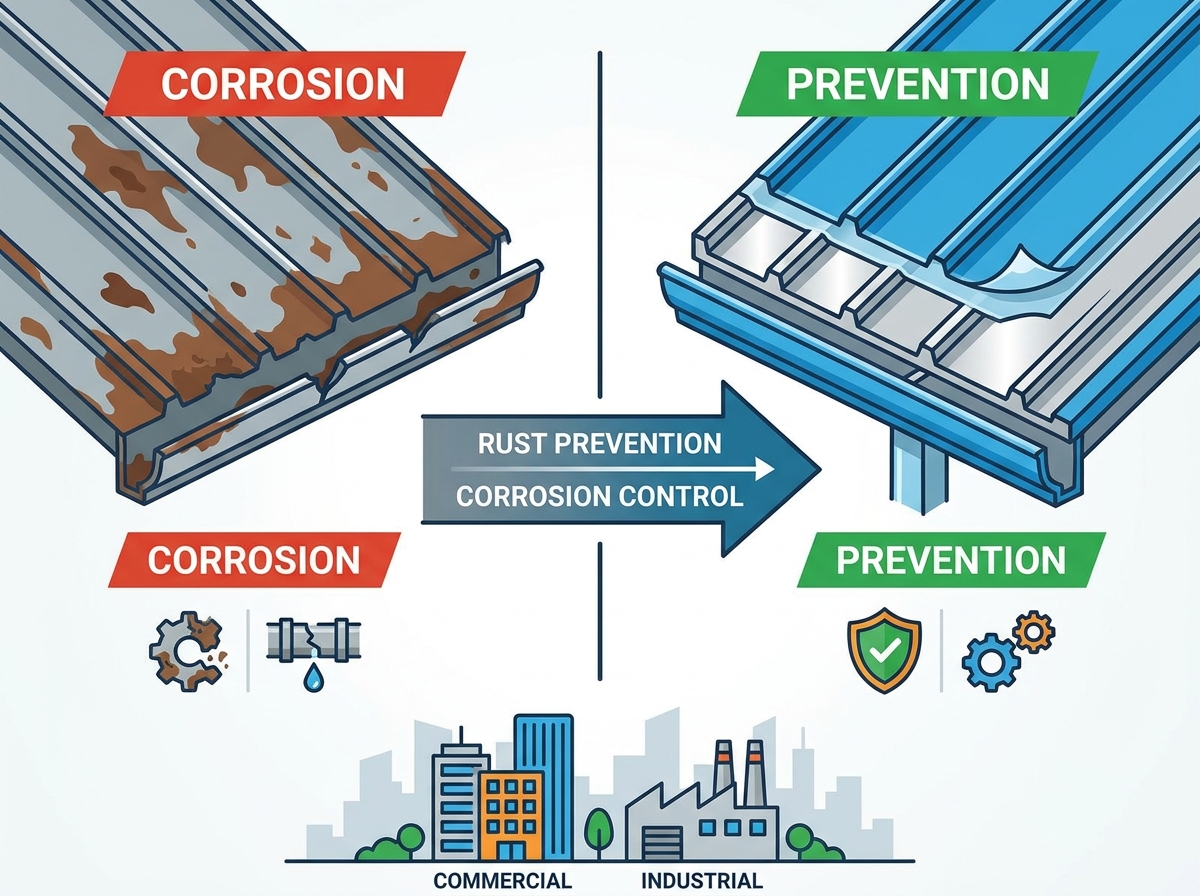
Implementing effective Rust Prevention requires a fundamental shift in facility management strategy. It demands an understanding of coating chemistry, environmental exposure, and precise application techniques. By addressing oxidation at the molecular level and establishing robust weatherproofing membranes, property owners can halt degradation and restore the structural integrity of aging metal roofs.
Capital Preservation: Rust prevention is a strategic financial mechanism to delay total roof replacement, not merely a routine facility maintenance task.
Coating Chemistry Matters: The selection between SMP, PVDF, and fluid-applied restoration systems directly dictates UV resistance, longevity, and lifecycle cost for commercial buildings.
Preparation is the Failure Point: Over 80% of premature coating failures in commercial settings stem from inadequate substrate preparation and failure to neutralize existing oxidation.
Environmental Context: Effective corrosion control requires matching the mitigation strategy to the specific microclimate (e.g., coastal salt spray, industrial chemical exhaust) of the facility.
Defining a successful roof preservation strategy requires establishing clear, measurable baselines. Success is not merely the temporary cessation of leaks. It involves extending the functional life of the roof assembly by a decade or more, maintaining strict warranty compliance, and achieving verifiable zero-leak status. Facility managers must evaluate interventions based on their ability to halt existing oxidation, prevent future moisture ingress, and integrate seamlessly with existing roof geometries. A properly executed preservation strategy transforms a deteriorating liability into a stabilized asset. You defer massive capital outlays associated with complete tear-offs. We look for solutions that address the root cause of panel degradation rather than just masking the symptoms.
Rust fundamentally alters the mechanical properties of metal roofing components. As oxidation progresses, it consumes the base steel, thinning the panels and severely compromising fastener integrity. When screw holes enlarge due to rust, the roof's wind uplift resistance plummets. We frequently see exposed fastener roofs where the EPDM washers have dried out, allowing water to pool around the screw head and initiate rust. Panel seams, which rely on tight tolerances to maintain watertight seals, warp and separate under the stress of thermal expansion combined with structural weakening. This degradation reduces the roof's robustness against adverse weather conditions. The facility becomes highly vulnerable to high wind uplift forces, hail impacts, and heavy snow loads that trigger localized collapses or catastrophic membrane failures.
There is a direct correlation between degrading roof coatings, the loss of solar reflectance, and subsequent spikes in cooling costs. Factory-applied finishes on metal roofs reflect a significant percentage of solar radiation. As rust spreads, the dark, oxidized surface absorbs massive amounts of thermal energy, transferring heat directly into the building envelope. This thermal bridging forces rooftop HVAC units to run longer cycles to maintain interior climate control. Equipment wear accelerates, and utility expenditures rise. Restoring the roof with highly reflective coatings reverses this penalty, drastically reducing thermal transfer into Commercial Buildings.
Visible rust and compromised roof integrity carry severe administrative and financial consequences beyond physical leaks. Commercial property insurers conduct regular aerial and physical inspections. Widespread corrosion often triggers immediate premium hikes or policy non-renewals due to the elevated risk of water damage and structural failure. Furthermore, severely rusted panels violate commercial building codes regarding non-combustible fire ratings. If the structural deck is compromised, the assembly may no longer meet the stringent fire resistance standards required for occupancy. Property owners face significant legal and regulatory liability when they ignore these structural warnings.
Intervening on an existing metal roof requires categorizing the damage and matching it to the appropriate methodology. Minor, localized oxidation around fasteners or penetrations is manageable through localized encapsulation. We utilize rust-inhibiting mastics and targeted sealants for these small areas. However, widespread surface rust demands full-scale restoration. This involves chemical rust converters to neutralize iron oxide, followed by multi-layer fluid-applied membranes or structural recoating. Selecting the correct approach depends heavily on the percentage of the roof affected, the depth of the oxidation, and the remaining structural integrity of the metal panels.
Understanding the baseline protection of metal panels dictates the intervention timeline. Galvanized steel relies on a zinc coating for sacrificial protection. Galvalume utilizes an aluminum-zinc alloy that offers superior long-term barrier protection but remains susceptible to tension-bend rust at the seams. Over time, UV exposure, acid rain, and physical abrasion deplete these factory-applied protective layers. Field-applied solutions become necessary the moment this factory finish chalks, fades, or exposes bare metal. Identifying this exact lifecycle stage before surface rust penetrates the substrate is the most important factor in successful intervention.
Metal Roof Substrate Vulnerabilities
| Substrate Type | Primary Protection Mechanism | Common Failure Point | Recommended Intervention |
|---|---|---|---|
| Galvanized Steel | Sacrificial zinc coating | Zinc depletion over time leading to widespread red rust | Full-scale rust converter and elastomeric topcoat |
| Galvalume | Aluminum-zinc alloy barrier | Tension-bend rust at panel seams and cut edges | Targeted seam detailing and fluid-applied silicone |
| Weathering Steel (Corten) | Controlled surface oxidation | Continuous moisture exposure preventing stable patina | Clear penetrating sealers or specialized rust inhibitors |
| Factory-Painted Aluminum | Inherent corrosion resistance plus paint | Chalking and fading of the factory finish | Power washing and application of PVDF architectural coating |
When recoating metal panels, the choice of resin technology dictates performance.
Silicone Modified Polyester (SMP): SMP systems offer a highly cross-linked structure that provides excellent resistance to physical abrasion and scratching. They are highly durable and cost-effective, making them suitable for standard commercial environments that require reliable protection with minimal maintenance. While they may chalk slightly faster than premium alternatives, their hard finish withstands foot traffic and physical impacts exceptionally well.
Polyvinylidene Fluoride (PVDF): PVDF coatings represent the premium tier of architectural finishes. Formulated with a highly stable carbon-fluorine bond, they deliver superior UV protection, exceptional color retention, and unmatched chemical resistance. PVDF is the optimal choice for harsh industrial environments, coastal regions, or facilities where maintaining exact corporate branding colors over decades is a priority.
Beyond architectural paints, fluid-applied restoration systems serve as comprehensive rust-inhibiting and waterproofing membranes. Elastomeric acrylics provide excellent reflectivity and breathability, allowing trapped moisture to escape. Polyurethane coatings deliver extreme tensile strength and resistance to ponding water, ideal for low-slope metal roofs. High-solids silicone systems offer unparalleled UV stability and permanent flexibility. They ensure the coating moves with the thermal expansion and contraction of the metal without cracking. These fluid-applied systems encapsulate the existing metal, stopping rust from spreading while creating a seamless, monolithic barrier against water intrusion.
Coating System Performance Comparison
| Coating Technology | UV & Color Retention | Chemical Resistance | Optimal Application Environment |
|---|---|---|---|
| SMP (Silicone Modified Polyester) | Moderate | Moderate | Standard commercial facilities, moderate climates |
| PVDF (Polyvinylidene Fluoride) | Excellent | High | Harsh environments, corporate branded facilities |
| Acrylic Elastomeric | Good | Low | Sloped roofs requiring high solar reflectance |
| High-Solids Silicone | Excellent | Moderate | Roofs prone to ponding water, extreme UV exposure |
| Aliphatic Polyurethane | Good | Excellent | Heavy foot traffic, severe industrial exhaust areas |
Selecting the right coating requires mapping specific chemical features directly to business outcomes. High elongation and tensile strength in a polyurethane coating translate directly to thermal shock resistance. This allows the roof to survive rapid temperature drops without splitting at the seams. Rust-inhibiting primers utilizing zinc-rich compounds ensure that microscopic oxidation is neutralized, preventing under-film corrosion. By prioritizing these specific features, facility managers guarantee zero operational disruption and establish a fortified weather defense that protects high-value interior assets.
The geographic location and localized operations of a facility dictate the required chemical resistance of the coating. Coastal salt air accelerates oxidation exponentially, requiring marine-grade primers and highly impermeable topcoats. Facilities in high UV index regions demand silicone or PVDF systems to prevent rapid chalking and degradation. Furthermore, localized chemical exhaust from manufacturing processes—such as acidic venting or airborne particulates—can dissolve standard acrylics in months. Assessing these microclimates is mandatory for specifying a system that will survive its intended lifespan on Industrial Buildings.
Galvanic corrosion occurs when dissimilar metals come into contact in the presence of an electrolyte, such as rainwater. This is a frequent, highly destructive issue on industrial roofs caused by rooftop HVAC installations, copper condensation lines draining onto galvanized steel, or the use of improper aftermarket fasteners. Evaluating the roof for this specific type of rapid degradation is a priority. The chosen Corrosion Control system must physically isolate these elements. We often apply heavy-duty dielectric barriers, replace incompatible fasteners, and reroute drainage lines before any broad coating application begins.
Industrial facilities often span hundreds of thousands of square feet. Evaluating the logistical feasibility of applying multi-coat systems at this scale is vital. The chosen system must allow for efficient application via commercial airless spray rigs rather than manual rolling, which is labor-prohibitive. Furthermore, the application process must be phased to ensure that daily operations, shipping logistics, and interior manufacturing processes remain completely undisrupted. Fast-curing systems that minimize the window of vulnerability to sudden weather changes are essential for large-scale deployments.
Industrial properties are subject to strict fire safety regulations. Adding layers of chemical coatings to a metal roof alters its combustibility profile. You must verify that the applied systems maintain or enhance the existing non-combustible ratings. Facility managers must select products that carry Underwriters Laboratories (UL) Class A fire ratings when applied over specific metal substrates. Failure to verify this compliance results in failed municipal inspections, nullified insurance policies, and severe safety hazards.
Every rust mitigation strategy involves conceptual trade-offs between initial capital outlay, expected lifespan, and ongoing maintenance burdens. A localized patching approach requires minimal upfront investment but guarantees ongoing labor costs and continuous monitoring. Conversely, a full-scale fluid-applied silicone restoration demands a significant initial budget but drastically reduces maintenance requirements for up to two decades. Decision-makers must weigh the operational lifespan of the facility itself against the durability of the chosen system to ensure capital is deployed efficiently.
Comparing the initial capital outlay of a premium PVDF or heavy-duty polyurethane restoration against the annualized cost of cheaper, frequent recoating cycles reveals the true financial impact of the investment. While standard acrylics appear budget-friendly initially, their shorter lifespan and susceptibility to ponding water often necessitate complete recoating within seven to ten years. Premium systems amortize better over a twenty-year period. They eliminate the recurring labor and material costs associated with inferior products.
The operational reality of maintaining different systems must be factored into the decision. Highly durable systems still require bi-annual visual inspections to clear debris from gutters and check for mechanical damage caused by third-party HVAC contractors. However, less durable coatings demand rigorous moisture buildup checks, frequent localized touch-ups at panel laps, and constant monitoring of fastener back-out. Facility teams must honestly assess their internal capacity to perform this ongoing maintenance when selecting a system. A neglected cheap coating will fail rapidly, destroying any initial savings.
Deciphering manufacturer warranties is a mandatory step in the evaluation process. Facility managers must distinguish between standard material warranties, which only cover defects in the liquid product out of the bucket, and No Dollar Limit (NDL) system warranties, which cover both materials and contractor workmanship if the system fails. Furthermore, these warranties contain strict maintenance clauses. Failure to document bi-annual inspections, clear ponding water, or repair mechanical damage promptly will void the manufacturer's liability. The building owner is then fully responsible for subsequent failures.
Even the most advanced chemical coatings fail if applied under the wrong conditions. Technical and environmental variables constantly threaten project success. Moisture trapped under the coating leads to immediate blistering and delamination. Applying products over active, untreated rust guarantees that oxidation will continue beneath the film, eventually flaking off the new membrane. Identifying these risks prior to mobilization allows project managers to build strict quality control checkpoints into the application schedule.
Surface preparation is the absolute foundation of any successful coating project. It is a non-negotiable prerequisite to stop existing rust from spreading. The substrate must be rigorously cleaned using high-pressure power washing, often exceeding 3,500 PSI, to remove dirt, chalked paint, and loose oxidation. For heavy rust, mechanical abrasion via wire wheeling or sandblasting is required to reach tightly adhered metal. Following this, the application of chemical rust converters or zinc-rich primers is mandatory. These chemicals alter remaining iron oxide into a stable, paintable iron phosphate surface.
Broad coating applications fail if the transition points are ignored. Fasteners, panel laps, ridge caps, and penetration flashings experience the highest degree of thermal movement and are the primary entry points for water. Before any field coating is applied, contractors must execute a strict detailing protocol:
Remove and replace any stripped or severely rusted fasteners with oversized self-drilling screws to ensure proper deck engagement.
Apply a generous bead of polyurethane or silicone mastic directly over the fastener head, ensuring the washer is completely encapsulated.
For horizontal seams, apply a base layer of elastomeric coating, embed a polyester fabric mesh into the wet coating, and immediately apply a top layer to seal the mesh.
Inspect all penetrations, including pipe boots and HVAC curbs, applying heavy-duty sealant to any gaps before the primary field coating is sprayed.
Commercial coatings are highly sensitive to ambient environmental conditions during the application and curing phases. Contractors must strictly monitor the dew point. Applying coatings when the substrate temperature is within five degrees of the dew point guarantees invisible moisture barriers that destroy adhesion. High humidity drastically retards the curing time of water-based acrylics, leaving them vulnerable to wash-off from sudden rainstorms. Extreme heat causes solvent-based systems to flash off too quickly, preventing proper wet-out and adhesion to the substrate. Contractors use wet mil gauges constantly during application to ensure the correct volume of product is applied. A coating applied too thin will not provide adequate UV protection or rust inhibition, while a coating applied too thick can skin over on the surface while remaining uncured underneath.
The performance of a roof restoration system is entirely dependent on the skill of the applicator. Utilizing contractors specifically certified by the coating manufacturer is an absolute necessity. Certified applicators possess the technical training required to ensure proper substrate selection, execute precise mil-thickness measurements during application, and adhere to commercial-scale safety protocols. Manufacturer NDL warranties are exclusively available when the system is installed by an approved contractor. This ensures the facility owner's investment is fully protected.
For building owners and contractors seeking reliable waterproofing and roofing material support, CANLON specializes in the development, manufacturing, and application support of high-performance polymer waterproofing and roofing materials, backed by advanced R&D and engineering expertise. With seven manufacturing plants and a portfolio covering waterproofing membranes, roofing membranes, and waterproofing coatings, CANLON supports durable building-envelope protection for a wide range of commercial and infrastructure applications.
Schedule a comprehensive, drone-assisted roof audit to map the exact square footage of existing oxidation and identify compromised fasteners.
Conduct core sampling and field adhesion tests to verify the structural integrity of the metal deck and ensure compatibility with proposed coating systems.
Draft a detailed Request for Proposal (RFP) specifying surface preparation standards, required wet mil-thickness, and No Dollar Limit (NDL) warranty requirements.
Vet and select only manufacturer-certified commercial roofing contractors with proven experience in large-scale industrial fluid-applied applications.
A: When properly applied over a meticulously prepared substrate, high-quality rust prevention coatings last between 10 and 20 years. Fluid-applied silicone and premium PVDF systems typically offer the longest lifespans. They are often backed by 15-to-20-year manufacturer warranties, provided regular bi-annual maintenance and inspections are conducted.
A: SMP (Silicone Modified Polyester) is highly resistant to physical abrasion and scratching, making it a cost-effective choice for standard environments. PVDF (Polyvinylidene Fluoride) offers superior UV resistance, exceptional color retention, and high chemical resistance. PVDF is the premium choice for harsh industrial or coastal environments.
A: Localized rust must be addressed immediately through mechanical abrasion to remove loose flaking. Follow this with the application of a chemical rust converter or zinc-rich primer to neutralize the oxidation. The area should then be encapsulated with a heavy-duty mastic and a compatible topcoat to seal out moisture.
A: No. Applying any coating directly over loose, active rust results in immediate adhesion failure and continued corrosion beneath the film. The surface must first be power-washed, mechanically abraded, and treated with a rust-converting primer before any topcoat is applied.
A: Severe corrosion compromises the structural integrity and wind uplift resistance of the roof, triggering insurance premium hikes or policy non-renewals. Additionally, if the metal deck is weakened, it may lose its non-combustible UL Class A fire rating, violating local building codes.
A: Rust prevention is no longer viable when oxidation has eaten completely through the metal panels, causing structural holes. It is also unviable when the panels lose their load-bearing capacity or when fastener holes enlarge to the point where they can no longer secure the roof to the purlins.